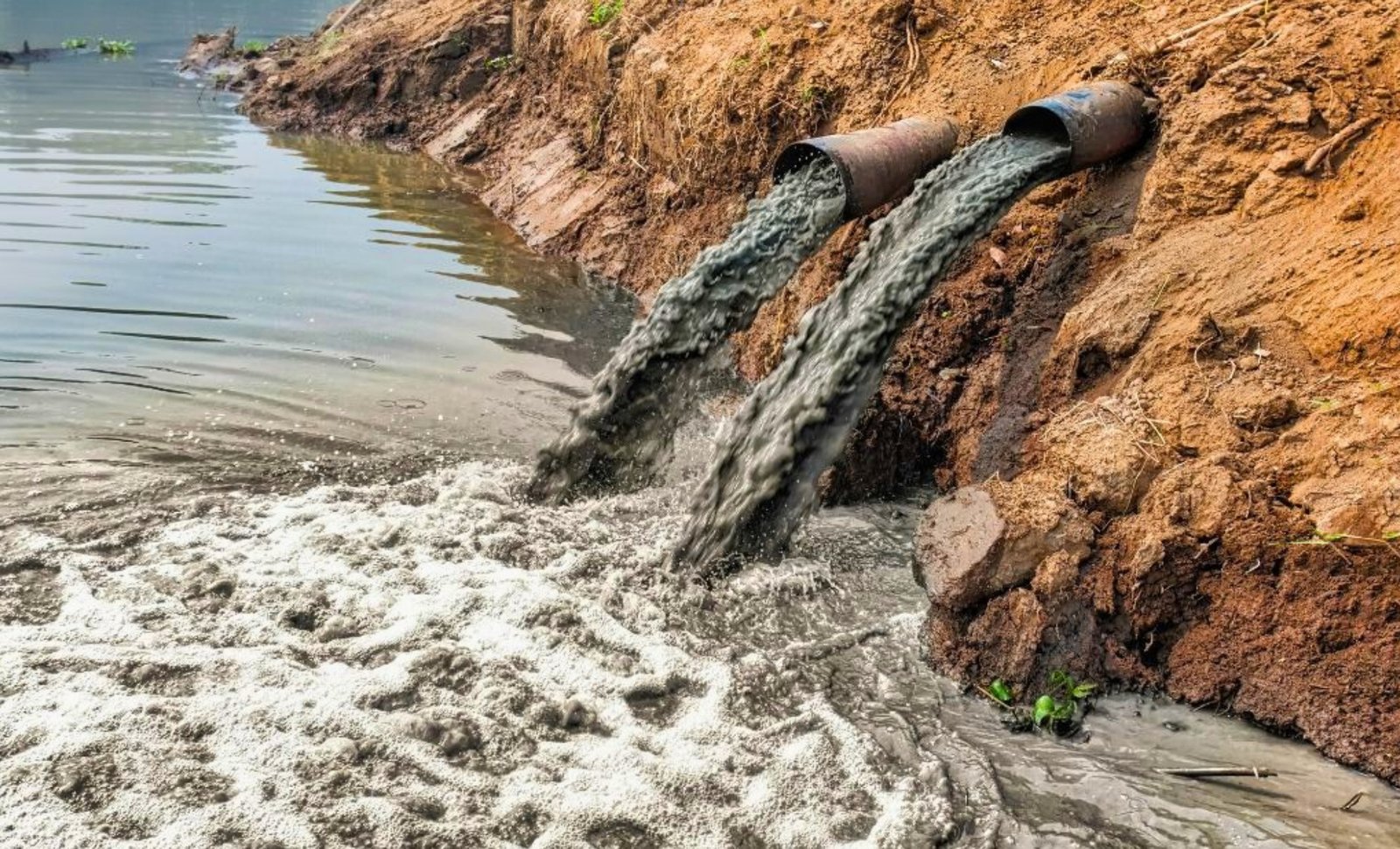
A drinking-water investigation in the Boston area produced 191 chemical annotations, including substances that standard monitoring methods could easily overlook. Yet only 12 reached the researchers’ highest level of identification confidence. The rest illustrate a problem confronting environmental chemists: modern instruments can reveal far more chemical signals than scientists can immediately identify.
The findings, published in ACS Environmental Au in 2026, are part of a broader effort to examine chemical contamination without relying entirely on predetermined lists of pollutants.
The approach, known as non-targeted analysis, is exposing a much wider range of substances in water and other environmental samples. Improvements in mass spectrometry are making these investigations increasingly practical, as described in a November 19 Science feature examining the search for previously overlooked chemicals.
The challenge now extends beyond finding them. Researchers must establish which signals represent actual compounds, determine their concentrations, and investigate whether they pose environmental or health risks.
Why Ordinary Pollution Tests Miss So Many Chemicals
Conventional chemical monitoring usually begins with a list. A laboratory selects specific pesticides, industrial compounds, pharmaceuticals, or other pollutants and uses validated methods to measure their concentrations.
That approach works well for known contaminants. Its limitation is that substances outside the testing list may go unnoticed, even when they are present in the sample.
Non-targeted analysis reverses much of that process. Instead of looking only for selected molecules, researchers use high-resolution mass spectrometry to record a broad collection of chemical signals.

Chromatography first helps separate compounds in a sample. The mass spectrometer then measures ions with high precision, while fragmentation patterns provide clues about molecular structure. Software compares these patterns with reference libraries and chemical databases to suggest possible identities.
Some matches can be verified against authentic chemical standards. Others remain tentative because several molecules may produce similar signals.
The U.S. Environmental Protection Agency emphasizes this distinction. Although the technique can examine thousands of potential chemicals, its results often carry greater uncertainty about molecular identity and concentration than conventional targeted measurements.
A detected signal, therefore, is not automatically a newly discovered pollutant, and identifying a pollutant does not establish that it is dangerous.
Boston Researchers Found Compounds That Previous Monitoring Overlooked
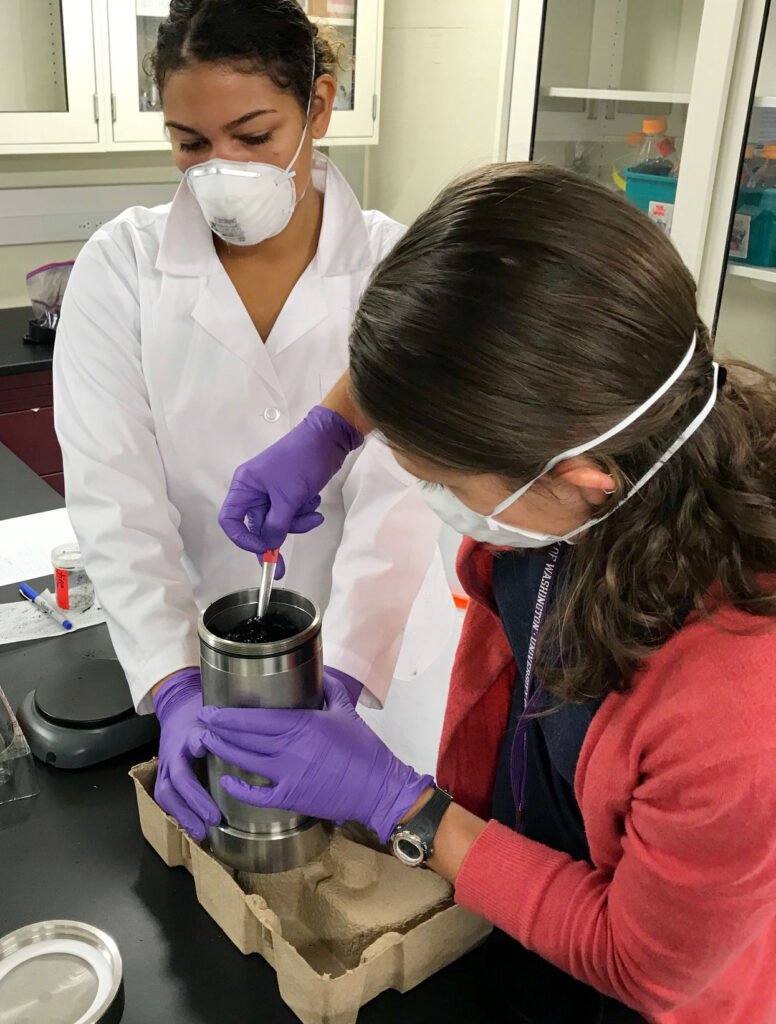
At Northeastern University, researchers led by Katherine Poisson and colleagues investigated persistent and mobile organic contaminants in drinking and surface water around Greater Boston.
These substances are particularly difficult to monitor because their chemical properties can allow them to move through water and, in some cases, resist conventional treatment processes.
The researchers developed a method combining sample concentration with a specialized chromatographic technique designed to capture highly polar compounds, which can be poorly retained by widely used analytical methods.
Across the drinking-water samples, they annotated 191 compounds. Twelve met the highest identification confidence level, while others received varying degrees of confidence based on the available chemical evidence.
The investigation also reported 12 previously unreported drinking-water contaminants at identification confidence level 2 or better. These included 1-methylguanidine, 1,2-dimethylguanidine, and trimethylarsine oxide.
Another finding emerged when the team compared different water sources. Fifty contaminants appeared in both drinking-water and surface-water datasets despite the sampled sources lacking a direct hydrological connection. Twelve were recorded across tap, bottled, and surface water.
This overlap did not establish a shared pollution source. Instead, it demonstrated how compounds can appear across different water systems and why broad chemical screening can reveal patterns that narrower testing might miss.
A Second Study Tested What Some of These Chemicals Could Do
Detecting contamination is only the first part of evaluating its significance.
In a separate 2026 investigation published in Environmental Science & Technology, researchers at Oregon State University examined drinking-water samples from 12 public water systems across western Oregon, along with one commercially bottled water sample.
Their screening produced 52 chemical annotations with relatively high identification confidence. Further investigation confirmed 13 compounds, including established contaminants such as the fungicide propiconazole, benzyl butyl phthalate, and the artificial sweetener saccharin.
The researchers also confirmed five substances they described as previously unreported in drinking water. Several were associated with natural products rather than exclusively industrial sources, demonstrating that an unfamiliar chemical is not necessarily synthetic.
The team then conducted laboratory toxicity experiments using zebrafish embryos and larvae.
Exposure to 18β-glycyrrhetinic acid, a compound associated with licorice, produced significant developmental effects under experimental conditions. A mixture containing benzyl butyl phthalate and monobenzyl phthalate also produced morphological toxicity. Additional tests identified behavioral changes following exposure to selected chemicals and mixtures.
These results do not demonstrate that the drinking-water samples were harmful to consumers. The experiments involved controlled laboratory exposures, and observed biological effects must be interpreted in relation to actual environmental concentrations.
They do, however, show why chemical identification needs to be followed by toxicological testing rather than treated as the final answer.
Germany Is Building a Record of Chemical Pollution Over Time
The technology is also changing how environmental monitoring data can be used.
In April 2026, researchers described the German NTSPortal, a system designed to preserve and analyze high-resolution chemical screening data from rivers and suspended particulate matter.
According to the study in Environmental Sciences Europe, the researchers examined a reference library containing 1,721 substances.
Of those, 855 were detected in at least one sample across the monitoring datasets. Another 247 appeared in all three sampling programs examined.
The results differed considerably between locations, reflecting the influence of local pollution sources, land use, and environmental conditions. Some regulated substances showed declining trends, while the broader chemical mixture remained relatively stable over the periods studied.
An important advantage of preserving mass spectrometry records is the ability to revisit earlier measurements. When researchers develop a way to identify a previously unrecognized chemical, stored data can potentially show whether that substance was present in samples analyzed years earlier.
That capability turns chemical monitoring into a historical record rather than a series of isolated snapshots.
The United States is moving toward broader surveillance as well. In September 2026, the EPA announced a drinking-water study using non-targeted analysis to examine pharmaceuticals, PFAS, and more than 1,000 potential contaminants.
The agency described the effort as a way to help determine which substances warrant further investigation, complementing established drinking-water monitoring programs.

Ghiles Houari is a writer based in Algeria with a technical background in applied science and industrial electronics. He is naturally curious about how things work, from everyday technology to the systems and ideas shaping the modern world.
With his hands-on technical training, Ghiles brings a practical and thoughtful perspective to his writing. He focuses on making science, technology, electronics, and innovation clear, interesting, and easy to understand.
For him, good writing is not just about explaining facts — it is about helping readers see why they matter.
Leave a Reply