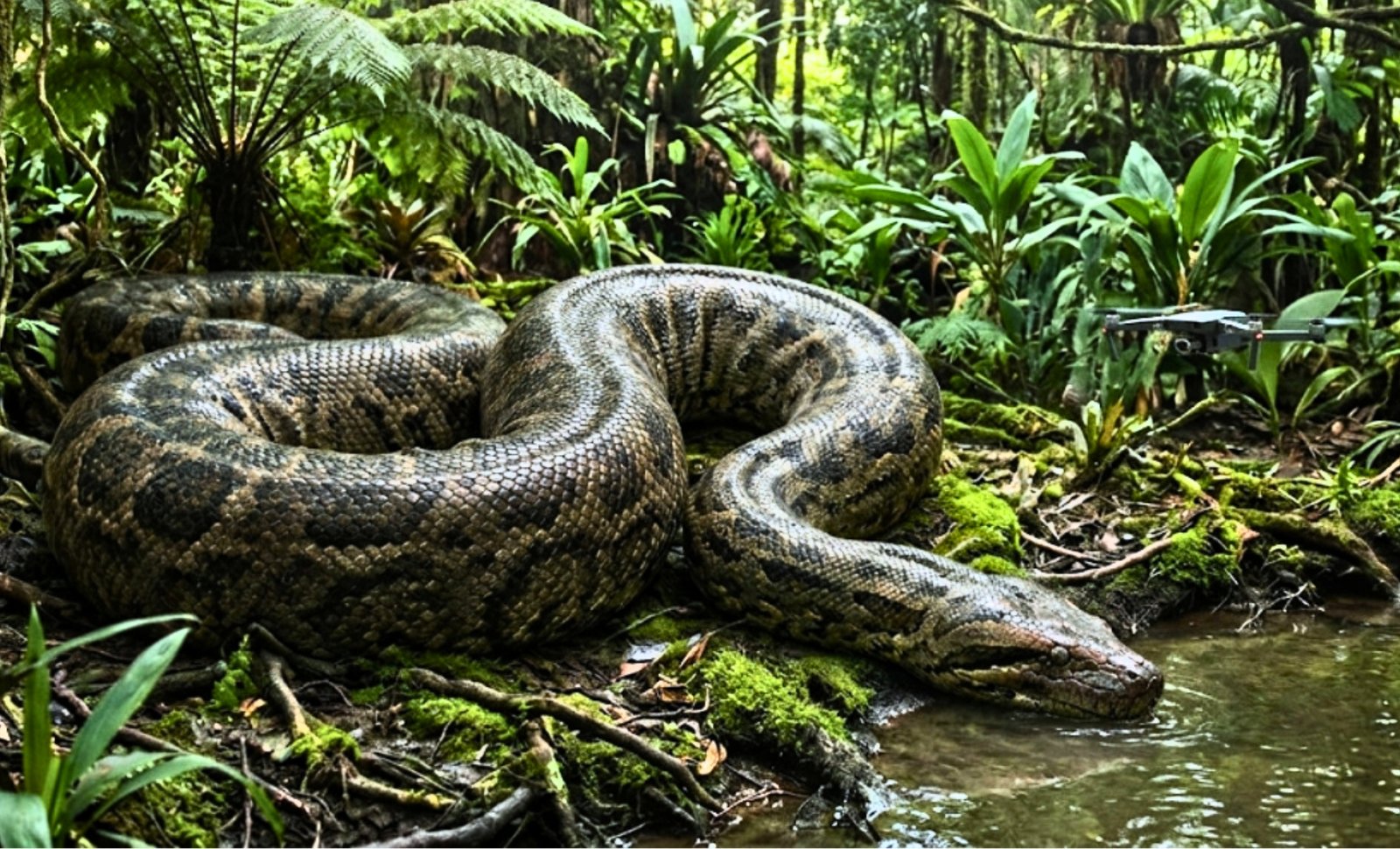
Deep inside a vast coal mine in northern Colombia, paleontologists uncovered the fossilized remains of a snake unlike anything alive today. Its massive vertebrae belonged to a prehistoric predator that inhabited South America’s tropical forests approximately 58 to 60 million years ago, long after the extinction of the dinosaurs.
Named Titanoboa cerrejonensis, the snake was estimated to reach 13 meters (43 feet) in length and weigh more than a metric ton. First described in 2009, this extraordinary discovery at the Cerrejón coal mine revealed not only one of the largest snakes ever known but also important clues about Earth’s ancient climate.
Massive Vertebrae Revealed a Prehistoric Giant
The discovery emerged from fossil excavations in Colombia’s La Guajira region, where mining operations exposed geological layers dating to the Paleocene epoch. Researchers investigating the deposits encountered unusually large vertebrae, some initially mistaken for crocodilian remains.
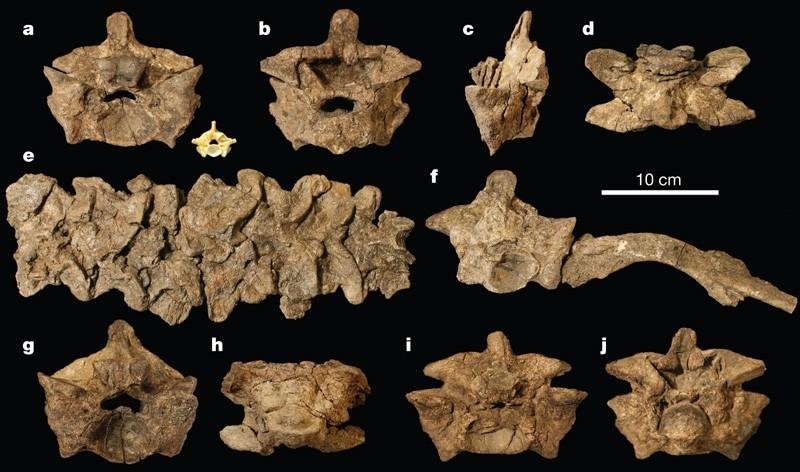
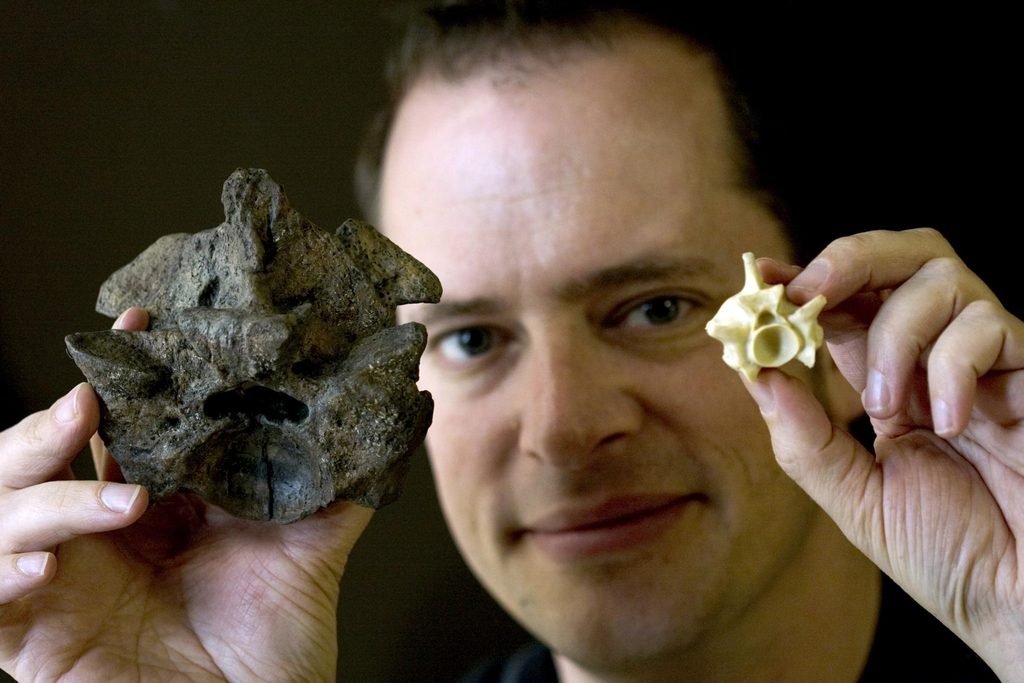
Closer examination revealed that the bones belonged to an enormous snake related to modern boas. Paleontologists compared the fossilized vertebrae with those of living snakes to reconstruct the animal’s likely dimensions.
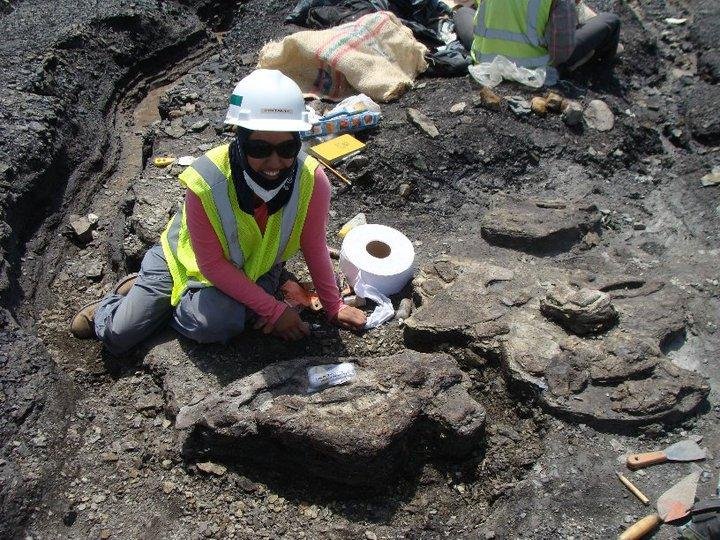
The results, published in Nature in February 2009, indicated a creature approximately 13 meters long and weighing around 1,135 kilograms (2,500 pounds). These figures were estimates based on skeletal proportions rather than measurements of a complete fossilized body.
The research involved scientists from institutions including the Smithsonian Tropical Research Institute and the University of Florida. Their findings established Titanoboa as one of the largest prehistoric snakes ever documented.
A One-Ton Predator in an Ancient Rainforest
Titanoboa inhabited a landscape dramatically different from modern northern Colombia. During the Paleocene, the region contained extensive tropical forests, rivers and freshwater habitats supporting a remarkable diversity of reptiles.
Its enormous size suggests that Titanoboa was a formidable predator, probably spending considerable time in or near water. Researchers have compared aspects of its possible lifestyle to those of modern anacondas, although its precise hunting behavior cannot be reconstructed from the available fossils.
The surrounding deposits contained remains of turtles, crocodile relatives and tropical vegetation. These discoveries helped scientists reconstruct an ancient tropical rainforest that flourished relatively soon after the mass extinction that eliminated non-avian dinosaurs.
Among the animals recovered from the same region were enormous freshwater turtles, including Carbonemys cofrinii and Puentemys mushaisaensis. Their presence showed that Titanoboa lived alongside other exceptionally large reptiles in a complex prehistoric ecosystem.
Its Extraordinary Size Offered Clues to Ancient Temperatures
One of Titanoboa’s most important scientific contributions involves the relationship between reptile body size and climate.
Unlike mammals, snakes rely heavily on environmental temperatures to regulate their body heat. Researchers therefore investigated whether Titanoboa’s enormous size could reveal how warm tropical South America was millions of years ago.
The original study proposed average annual temperatures of approximately 30–34°C (86–93°F), higher than those typical of many modern tropical rainforests.
These estimates became part of a scientific debate about the reliability of using reptile size to reconstruct ancient temperatures. Researchers subsequently questioned some assumptions behind the calculations, highlighting the influence of physiology and evolutionary history.
Nevertheless, Titanoboa remains important evidence of the Paleocene climate and the giant reptiles that inhabited South America during the warm conditions of the early Cenozoic.
A Second Giant Snake Challenged Titanoboa’s Record
Titanoboa’s exceptional dimensions made it famous as the largest snake ever discovered. But a discovery announced in 2024 introduced another possible contender.
Researchers examining fossils from the Panandhro lignite mine in Gujarat, India, identified a giant extinct snake named Vasuki indicus, which lived approximately 47 million years ago.
Their analysis of 27 fossil vertebrae suggested a body length between 10.9 and 15.2 meters, potentially exceeding Titanoboa’s estimated length.
The findings, published in Scientific Reports in April 2024, came with considerable uncertainty because the researchers lacked a complete vertebral column.
Both discoveries demonstrate how mining excavations can expose prehistoric snake fossils preserved for tens of millions of years. They also reveal that gigantic snakes evolved in different regions during particularly warm periods of Earth’s history.
The Colombian Mine Preserved More Than a Giant Snake
The discovery of Titanoboa transformed the scientific importance of the Cerrejón Formation. Its fossil-bearing sediments preserve evidence of one of the earliest known Neotropical rainforests, offering researchers a rare opportunity to examine tropical ecosystems after the end-Cretaceous extinction.
Fossil plants, turtles, crocodile relatives and snakes collectively reveal a landscape supporting complex biological communities millions of years before humans existed.
Titanoboa eventually became the subject of a life-size reconstruction displayed by the Smithsonian National Museum of Natural History in 2012.
The reconstruction brought public attention to an animal originally identified through isolated fossil bones, including the enormous vertebrae uncovered beneath the Colombian coal deposits.

Ghiles Houari is a writer based in Algeria with a technical background in applied science and industrial electronics. He is naturally curious about how things work, from everyday technology to the systems and ideas shaping the modern world.
With his hands-on technical training, Ghiles brings a practical and thoughtful perspective to his writing. He focuses on making science, technology, electronics, and innovation clear, interesting, and easy to understand.
For him, good writing is not just about explaining facts — it is about helping readers see why they matter.
Leave a Reply