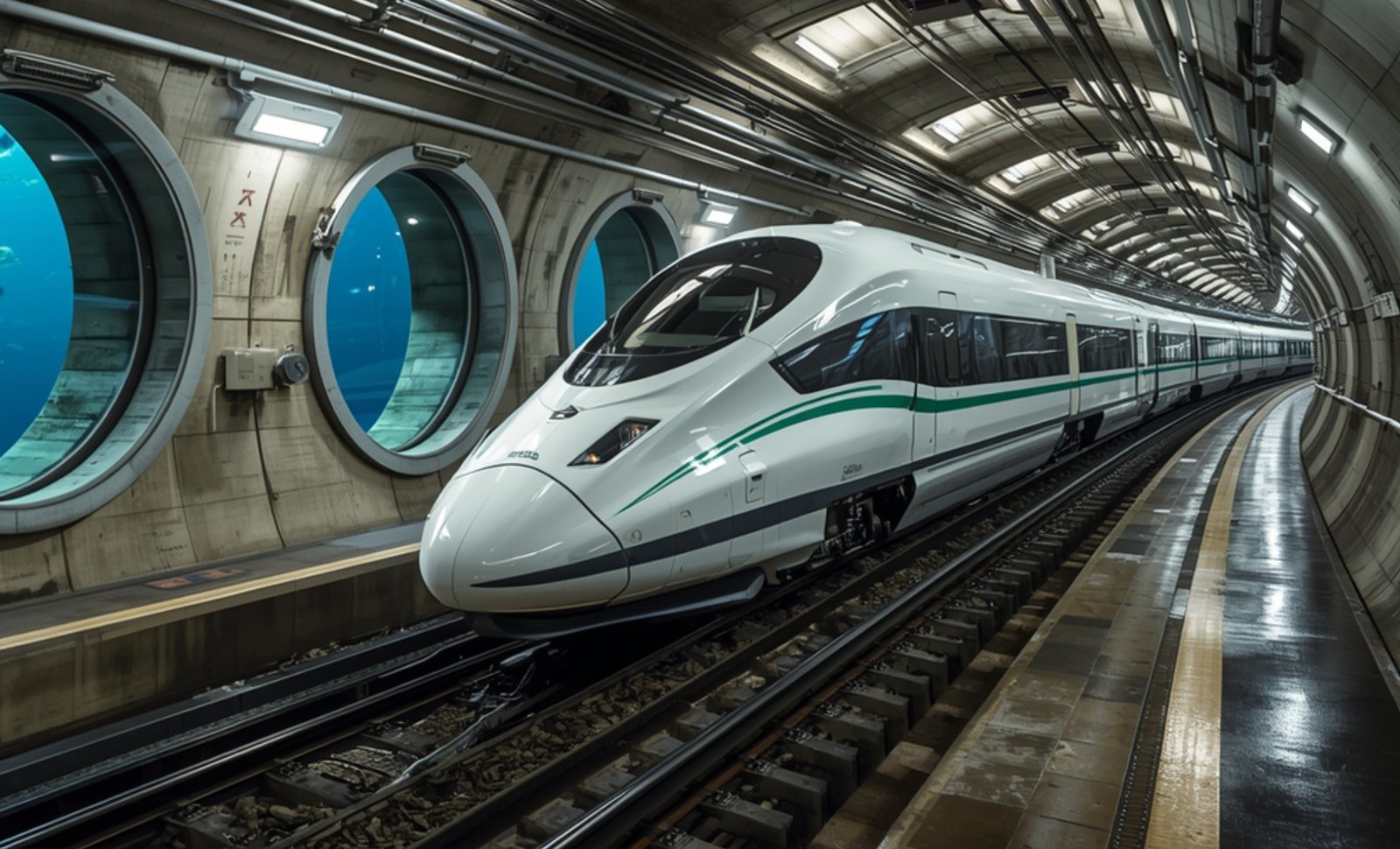
Deep below the Pearl River Estuary, a machine is currently operating at depths once considered unreachable for transport. The project sits 115 meters below the sea level. At this depth, the surrounding water and soil exert a pressure that tests the limits of modern materials. This tunnel connects the cities of Shenzhen and Jiangmen.
Engineers reported that the project is now the deepest undersea high-speed railway tunnel. It is a massive megaproject that relies on a specialized shield machine to cut through rock and soil. The work happens in a silent, high-pressure environment far below the surface. Each section is a test of mechanical endurance and precision.
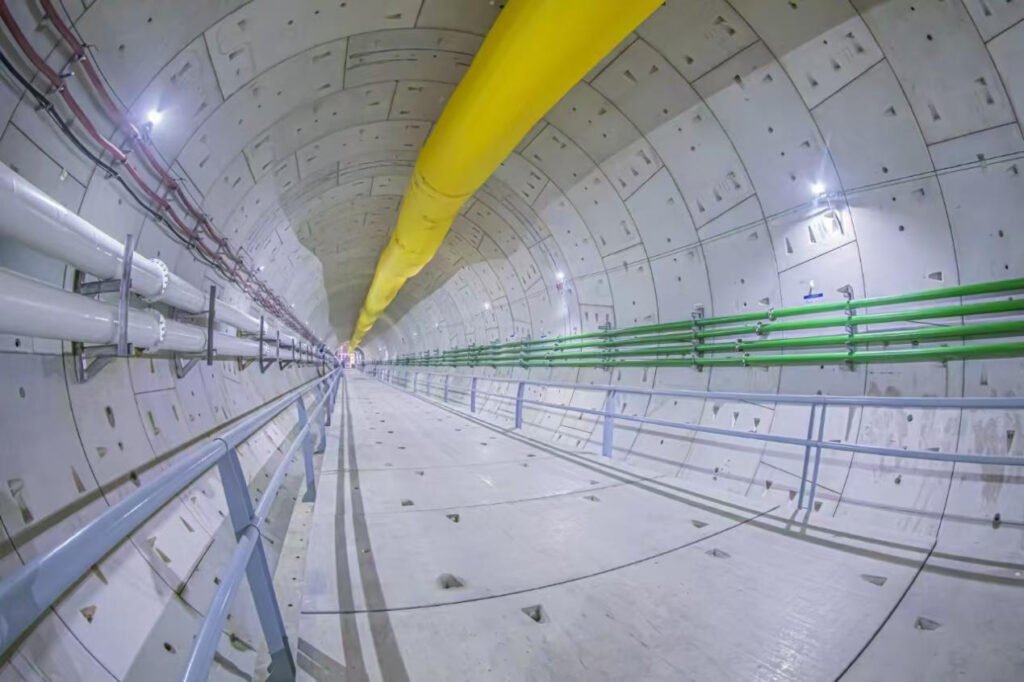
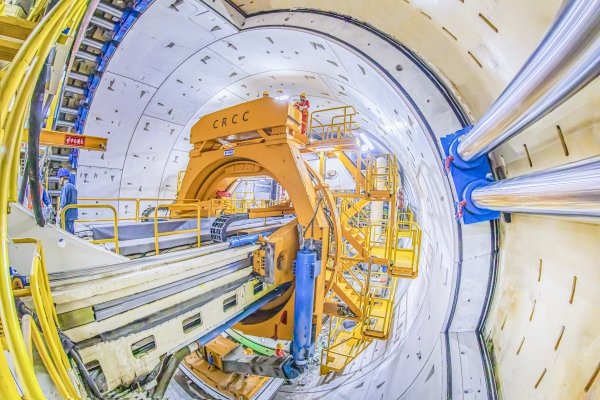
The Shenjiang-1 machine is the primary tool used for this excavation. It is a large-scale boring machine designed to manage the unique pressures of the seabed. Its success determines the feasibility of similar projects in other coastal regions around the world. The machine serves as a mobile laboratory for deep-earth engineering.
This project is a major piece of the infrastructure strategy for the southern coast of China. It is designed to link major trade zones using advanced transport systems. Success depends on maintaining a balance between the machine and the weight of the estuary. The technical data provides a clearer picture of the daily difficulty involved.
Technical Standards at 115 Meters
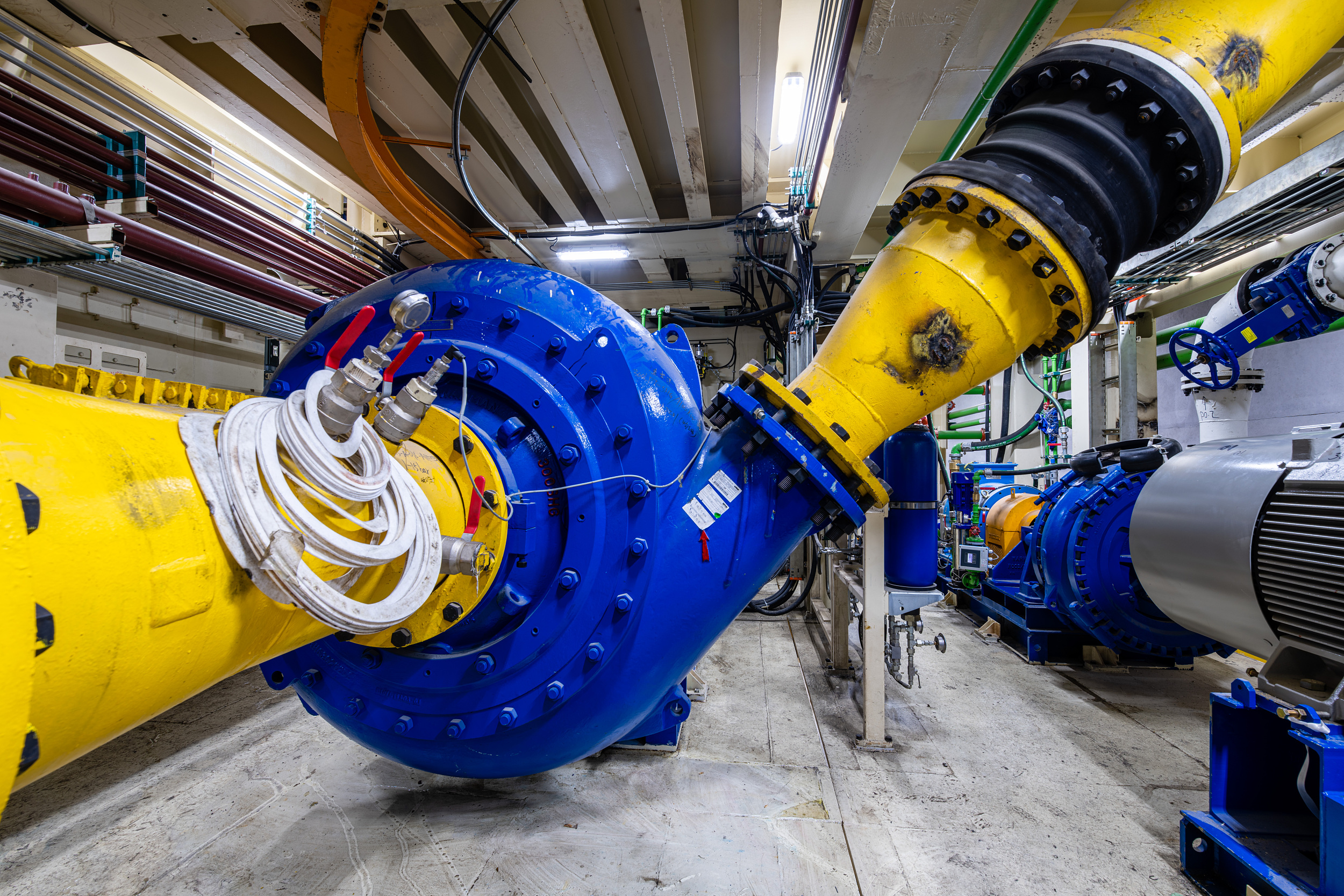
The tunnel spans 13.9 kilometers through a variety of difficult terrains. A report from the State-owned Assets Supervision and Administration Commission (SASAC) found that the machine handles 10.6 bar of pressure. This is a high level of hydrostatic pressure. The machine uses a dual-pipeline slurry system to move debris and keep the workspace stable.
“The difficulty of this project is not just the depth, but the complex transition between hard and soft ground,” said an engineer in a report from Science and Technology Daily. The machine navigates through different geological strata that change frequently. This includes sections of volcanic rock and soft silt. Active sensors monitor the machine to prevent structural issues.
The Ecns news service reported that the excavation passed the 113-meter mark this year. The tunnel is a key part of the Greater Bay Area plan. It connects major cities in southern China to support economic growth by making travel between trade hubs faster for millions of residents.
The specialized autonomous navigation system on the drill head is essential for this work. It adjusts the speed and torque of the machine based on the density of the rock. This technology allows the team to work through areas with high water content without risking a collapse. It is a refined approach to civil engineering in a high-risk environment.
The Logistics of Deep-Sea Transit
The new railway is expected to reduce travel time between Shenzhen and Jiangmen to less than sixty minutes. This change affects regional logistics and trade. By building deep underground, the project avoids interfering with surface shipping. The Pearl River Estuary is one of the busiest water routes in the world for international cargo ships and ferries.
The construction requires high precision to ensure safety for future passengers. Each concrete segment must fit perfectly to resist the weight of the sea. “Transportation is the precursor to development,” said a policy analyst for the Guangdong-Hong Kong-Macao Portal. The project is a tool for urban integration that bypasses traditional geographic limits.
The use of bullet trains in these tunnels is a specific choice for the region. These trains operate at speeds that require very stable tracks and tunnels. Even small shifts in the ground could cause problems for a train traveling at 350 kilometers per hour. For this reason, the tunnel is built to withstand fault zones and potential seismic activity.
Technical Innovation and Maintenance
Data from Click Oil and Gas showed that the machine manages pressure that would destroy standard equipment. This type of subsea construction is being watched by engineers worldwide. This innovation in tunneling represents a shift in mechanical capability for high-speed rail projects.
The completion of this deep-sea passage raises questions about the future of global transit. If tunnels can reliably operate at these depths, the way we map trade routes might change. The physical barriers of the ocean are becoming manageable variables in an engineering equation. This project is a test of how far we can push materials.
Future projects will likely look at the data from the Pearl River Estuary to set safety standards. The long-term durability of these structures is the next area of study. While the record is set, the actual operation of the railway will provide the final proof. We are now seeing a shift in how we approach the depths.

Farid Amber is a Canada-based writer and Editor-in-Chief who covers technology, space, and the environment. With a strong technical background, he brings a clear and practical perspective to stories about innovation, science, and the future of our planet.
His education includes a diploma in Applied Science, a master’s degree in Industrial Electrical Engineering, and a diploma in Electromechanical Automated Systems. This gives him a deep understanding of how modern technologies work, from complex engineering systems to the ideas driving new discoveries.
As Editor-in-Chief, Farid focuses on making complex topics easy to read, accurate, and meaningful. His goal is to help readers understand not only what is happening in the world of science and technology, but why it matters.


Leave a Reply