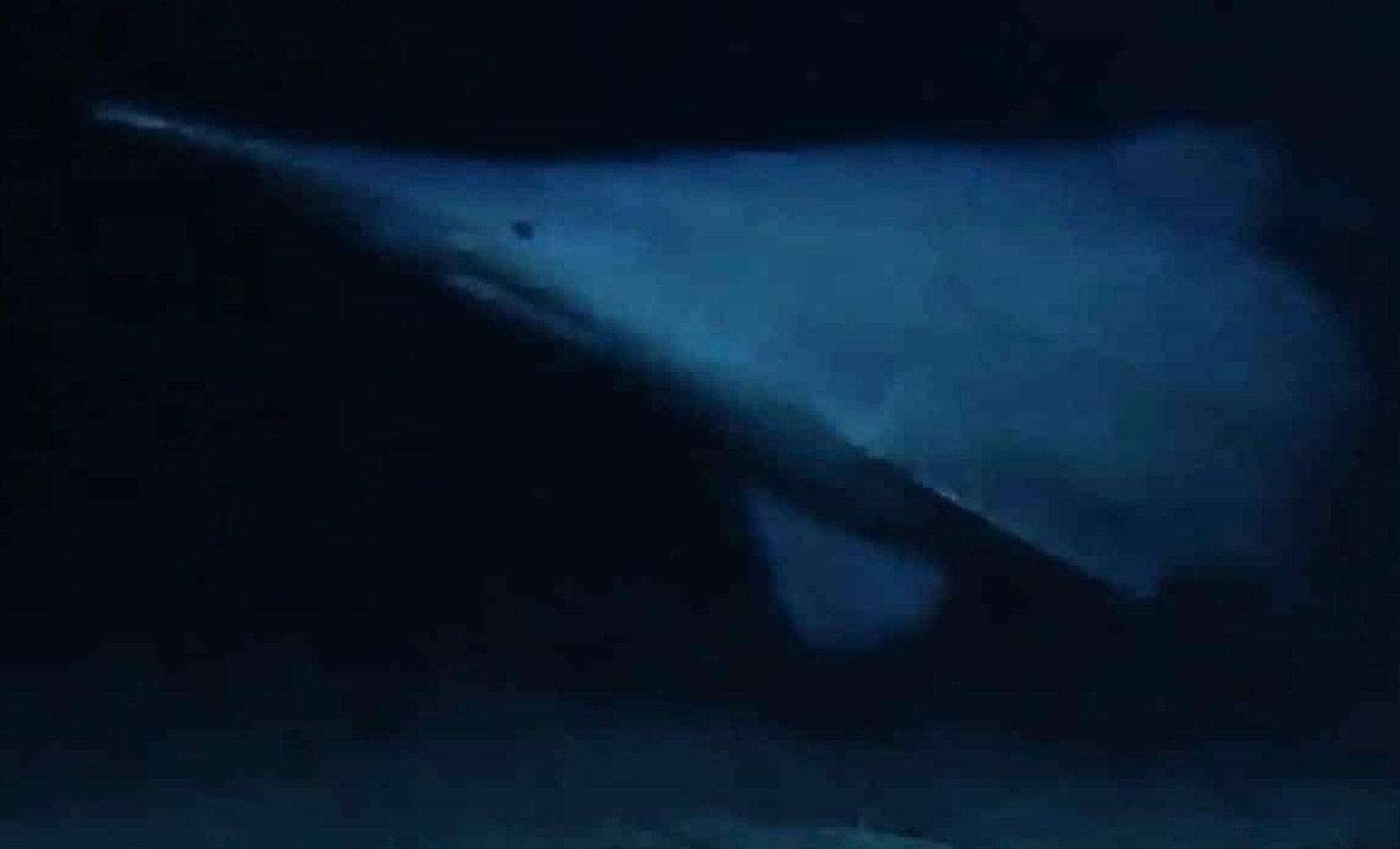
A University of Hawaiʻi at Mānoa-led team has reported the first published live observations of the goblin shark in its natural deep-ocean habitat. The findings, published in the Journal of Fish Biology, document two separate encounters with the rarely seen shark: one near Jarvis Island and another on the slope of the Tonga Trench.
The observations, described by the University of Hawaiʻi, show the animal alive in the deep sea rather than at the surface after being caught. Previous live footage of goblin sharks had come from individuals brought up on fishing lines, where they soon died.
A Rare Shark Seen in Its Own Habitat
The deep-sea shark, formally known as Mitsukurina owstoni, is sometimes called a living fossil because it is the only living representative of a shark family with a lineage nearly 125 million years old. Despite that long history, the species is rarely observed alive, and most knowledge of it has come from captures, specimens and scattered records.

The new paper records two live sightings in the Pacific. One came from an unnamed seamount northwest of Jarvis Island. The other came from the slope of the Tonga Trench, one of the deepest oceanic trench systems on Earth. Together, the sightings place the shark in areas and depths that had not previously been part of its published live-observation record.
The First Sighting Was Found in Archived Nautilus Footage
One record came from a 2019 Ocean Exploration Trust expedition aboard the exploration vessel Nautilus. The expedition surveyed deep-sea ecosystems near Kingman Reef, Palmyra Atoll and Jarvis Island within the Pacific Remote Islands Marine National Monument. The shark appeared during a livestreamed dive by the remotely operated vehicle Hercules at a seamount northwest of Jarvis Island.

Aaron Judah, lead author of the paper and a doctoral candidate at the University of Hawaiʻi at Mānoa, learned in 2025 that colleagues at the Deep-Sea Animal Research Center had heard of a possible goblin shark sighting in the archived expedition footage. He searched the public video archive and identified the shark in the recording.
The location stood out because goblin sharks had previously been known in the Pacific from limited areas off the western United States, Australia and Japan, along with narrow regions in the Atlantic and Indian Oceans. The Jarvis Island record placed the species in the Central Pacific, a region where it had not been previously known from published records.
A Brief Appearance on the Tonga Trench Slope
The second sighting came during a 2024 expedition aboard the research vessel Dagon. The expedition was part of the Inkfish Open Ocean Expedition led by scientists from the Minderoo-University of Western Australia Deep-Sea Research Centre. There, a baited deep-sea camera mounted on a bottom lander recorded a goblin shark on the slope of the Tonga Trench.
Daily Galaxy reported that the camera system collected deep-ocean footage for more than 50 days across depths ranging from 800 to 10,800 meters. During that long deployment, the goblin shark appeared for a little more than 20 seconds at a depth of 1,997 meters.

Alan Jamieson, professor and founding director of the Minderoo-UWA Deep-Sea Research Centre and a co-author of the study, documented the 2024 sighting. He said he never thought they would see a goblin shark alive and described the discovery as “amazing.”
The Sightings Expand the Shark’s Recorded Range
The University of Hawaiʻi release says the two observations expand both the known geographic range and the known depth range of Mitsukurina owstoni. Judah said the Tonga Trench observation was nearly 700 meters deeper than the species had previously been known to live.
That depth record also affects the broader shark group known as Lamniformes. This order includes white sharks, basking sharks and mako sharks. According to the University of Hawaiʻi, the Tonga Trench record extends the known depth record for the group.
The Jarvis Island observation also adds a new location to the species’ documented distribution. With that record, the goblin shark can be included in regional management and in a nation’s biodiversity list where it had not previously been recognized.
A Rare Moment From the Deep Pacific
The footage offers an unusual look at a shark that is famous partly because it is so rarely seen. Goblin sharks are known for their unusual head shape, protruding jaws and deep-sea lifestyle, but the new observations focus less on appearance than on location, depth and habitat.
For Judah, the record was also a reminder of how much remains unseen in the deep ocean. He said discoveries like this show “there is still so much to explore.”
In this case, one rare shark appeared in archived expedition footage near Jarvis Island, and another crossed a baited camera’s view on the Tonga Trench slope for only seconds. Together, those moments became the first published live observations of the species in its natural deep-sea home.

Ghiles Houari is a writer based in Algeria with a technical background in applied science and industrial electronics. He is naturally curious about how things work, from everyday technology to the systems and ideas shaping the modern world.
With his hands-on technical training, Ghiles brings a practical and thoughtful perspective to his writing. He focuses on making science, technology, electronics, and innovation clear, interesting, and easy to understand.
For him, good writing is not just about explaining facts — it is about helping readers see why they matter.



Leave a Reply