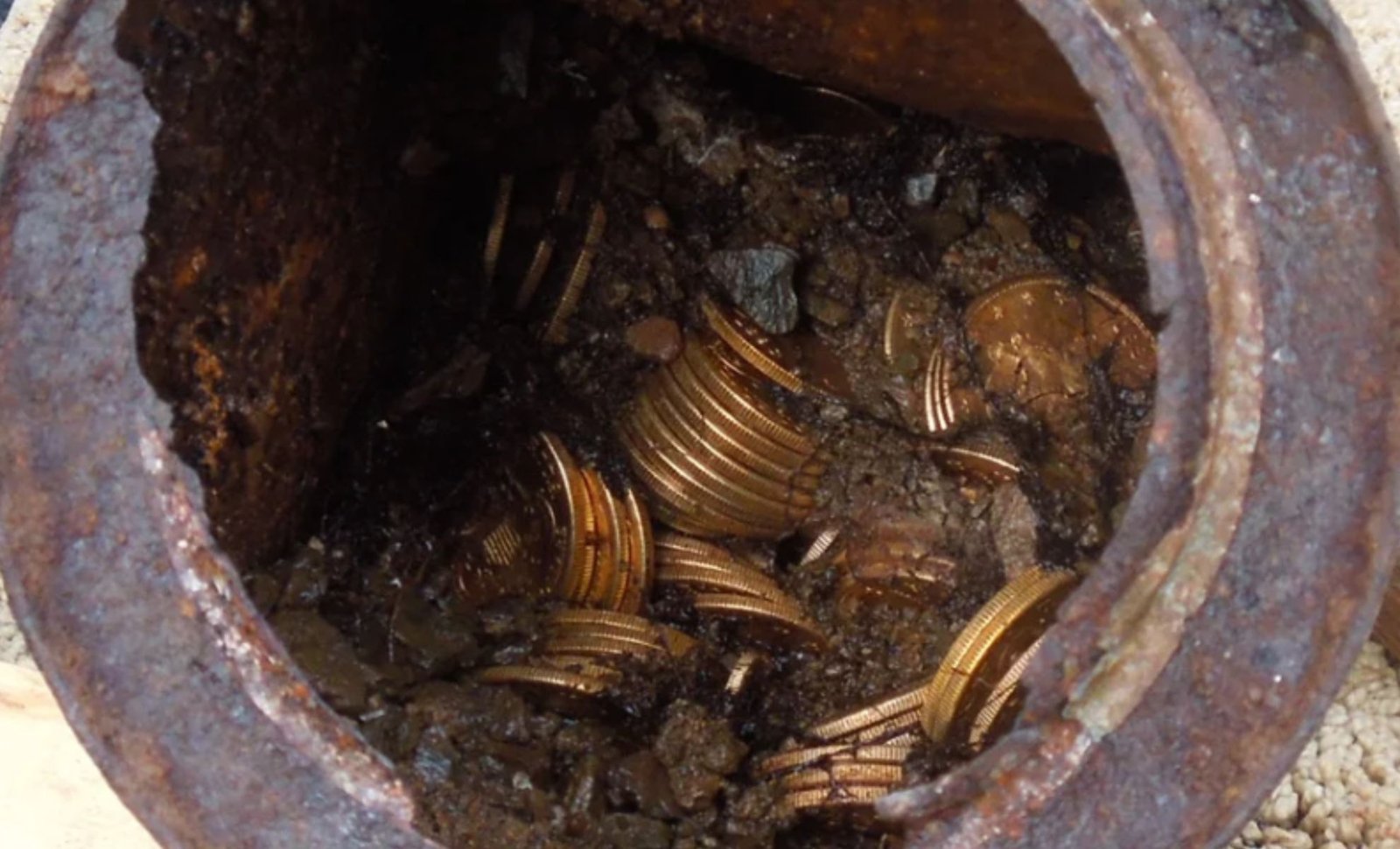
A notary inspecting an empty house in southwest France found something unusual behind a painting: a concealed space in the wall, hidden inside a storage room. The house had belonged to Paul Narce, a private collector from Castillonnès who died in 2024 after spending his final year in a care home.
Inside the wall were more than 1,000 gold coins, arranged with the kind of order that suggests a collector’s hand rather than a hurried hiding place. Among the cache were 10 packages, each containing 172 gold 20-franc coins. The coins had been out of sight in a rural home, but they would soon be listed, priced and sold in one of Paris’s best-known auction settings.
The core result came in June 2025, when the collection sold for more than €3 million, or about $3.48 million, at Hôtel Drouot in Paris. The auction, organized by Beaussant Lefèvre & Associés, beat a reported presale estimate of about €2 million and turned Narce’s private collection into a public numismatic event.
A Private Cache Hidden in a Village House
Narce lived in Castillonnès, a village in southwest France, where only a limited circle appears to have known about his collecting. After he moved into a care home roughly a year before his death, the house was left empty. The later inspection of the property changed the story from an estate matter into the discovery of a carefully stored collection hidden behind a painting.

The detail that gives the find its force is the physical arrangement. These were not loose coins spilling from a drawer, nor a single box of old money found in an attic. The 20-franc pieces were grouped into identical packages, each with the same count, giving the cache the look of something deliberately organized and preserved inside the wall.
That private order shaped the next stage of the story. Once the coins entered the auction process, the hidden packets were transformed into catalogue entries, estimates and final prices. A collection that had been kept from view in a storage room became a sale that buyers could study lot by lot.
The Sale Moved From Castillonnès to Hôtel Drouot
The official Beaussant Lefèvre catalogue identifies the auction as “Numismatique – Collection Paul Narce – 1er jour de vente,” held on June 10, 2025, at Hôtel Drouot in Paris. The catalogue also listed Thierry Parsy as the numismatic expert assisting the sale, placing the collection within the specialist world of rare coin auctions.
The auction total was more than €3 million, above the reported estimate of about €2 million. Daily Galaxy reported that all lots sold during the auction week, a detail that gives the sale a different texture from a single headline number. The result was not only one large price, but a full dispersal of a collection that had been hidden from public view.

By the time the coins reached Paris, their setting had changed completely. In Castillonnès, they had been concealed behind a painting. At Hôtel Drouot, they appeared as numbered lots with descriptions, estimates, hammer prices and fees. The same objects moved from secrecy to documentation.
Ancient Macedonia Sat Beside French Royal Coinage
The Paul Narce collection covered more than 2,000 years of coinage, with material reaching from ancient Mediterranean money to French royal currency. Some pieces were linked to the Kingdom of Macedonia between 336 and 323 B.C., placing part of the collection in the period associated with the ancient Greek world.
Other pieces belonged to near-complete series from the reigns of Louis XIV, Louis XV and Louis XVI. That range made the sale broader than a cache of modern gold coins. It brought together ancient kingdoms, medieval and regional coinage, and royal France inside one private collection.

Coin expert Thierry Parsy described the collection as “exceptional both in number, with more than 1,000 pieces, as well as the rarities it contains.” The quote matters because it separates two parts of the appeal: the scale of the collection and the presence of rarer pieces within it.
The Catalogue Revealed the Collection’s Range
The first day of the Beaussant Lefèvre sale listed 455 lots. Those entries moved through coins connected to the Ostrogothic kingdom, Visigothic Spain, the Merovingian kingdom, Aquitaine, Flanders, Brabant, Brittany and Provence. In the catalogue, the hidden cache became a sequence of regions, rulers and periods rather than a single mass of precious metal.
One lot shows how individual pieces could outperform expectations. An Aquitaine coin associated with Edward the Black Prince sold for €13,750 with fees, after being estimated at €4,000 to €6,000. That example gives the auction a more concrete shape than the overall total alone, showing how one historically identified coin could draw bidding well beyond its estimate.
The catalogue also helps explain why the sale was not simply about bullion. Gold content mattered, but the auction presentation gave buyers specific coins with historical labels, dates and regional identities. A coin tied to Aquitaine or a royal reign carries a different kind of market interest than an anonymous piece of precious metal.

Farid Amber is a Canada-based writer and Editor-in-Chief who covers technology, space, and the environment. With a strong technical background, he brings a clear and practical perspective to stories about innovation, science, and the future of our planet.
His education includes a diploma in Applied Science, a master’s degree in Industrial Electrical Engineering, and a diploma in Electromechanical Automated Systems. This gives him a deep understanding of how modern technologies work, from complex engineering systems to the ideas driving new discoveries.
As Editor-in-Chief, Farid focuses on making complex topics easy to read, accurate, and meaningful. His goal is to help readers understand not only what is happening in the world of science and technology, but why it matters.


Leave a Reply