
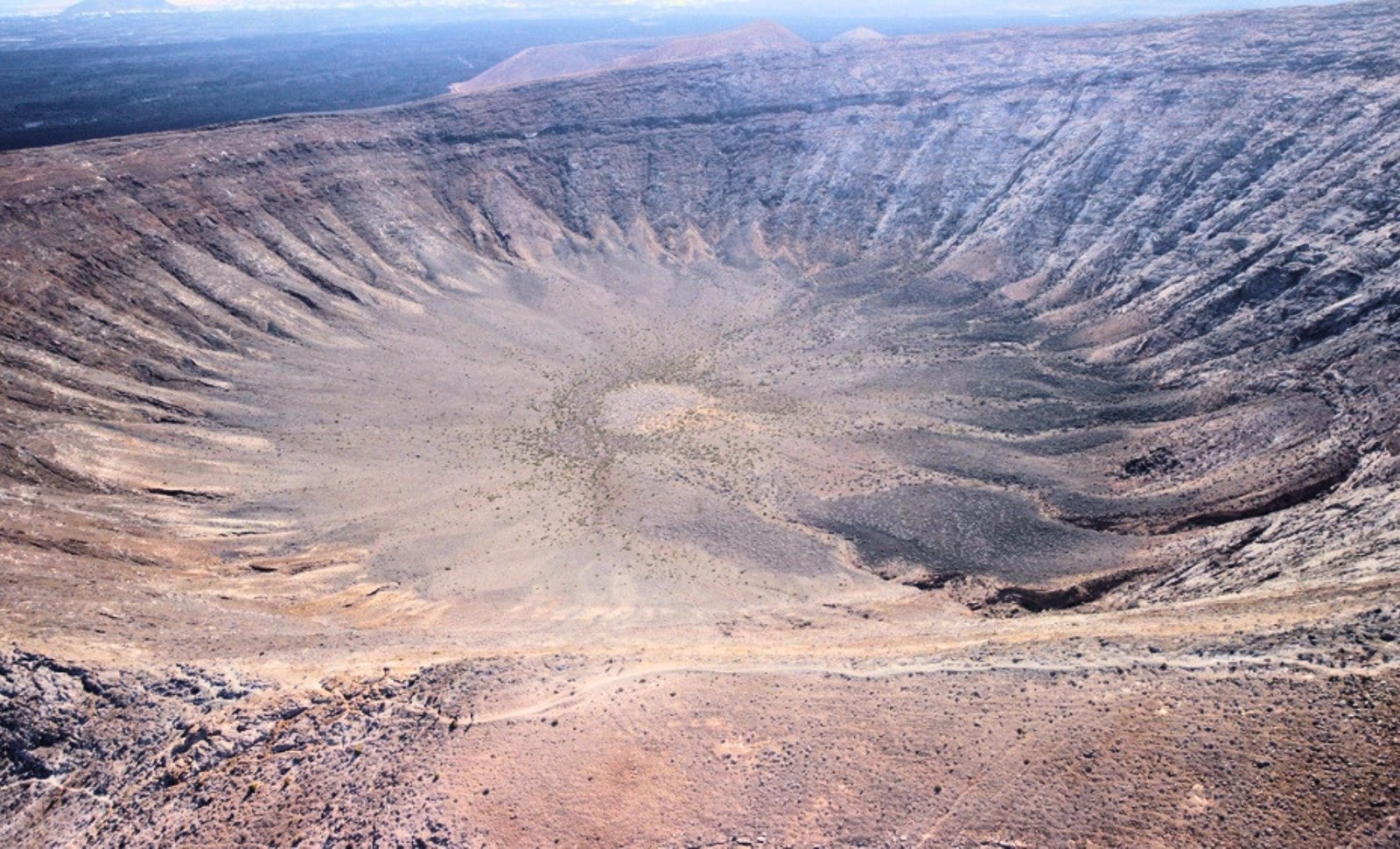
An asteroid that blasted a crater into the Korean Peninsula 42,000 years ago did more than scar the landscape. According to new research, the immense heat from the collision simmered groundwater for tens of thousands of years, creating a warm, protected lake where microbial life thrived long after the initial devastation cooled.
Researchers from the Korea Institute of Geoscience and Mineral Resources (KIGAM) discovered layered, fossilized structures called stromatolites inside the Hapcheon impact crater, also known as the Jeokjung-Chogye Basin. The findings, published in the journal Communications Earth & Environment, provide the first clear evidence that asteroid impacts can forge long-lived hydrothermal environments capable of supporting microbial ecosystems. The discovery offers a tangible link between catastrophic collisions and the sheltered pockets where early life might have gained a foothold on a bombarded Earth, and it hands astrobiologists a new target in the search for ancient life on Mars.
Not Just a Scar, But a Shelter
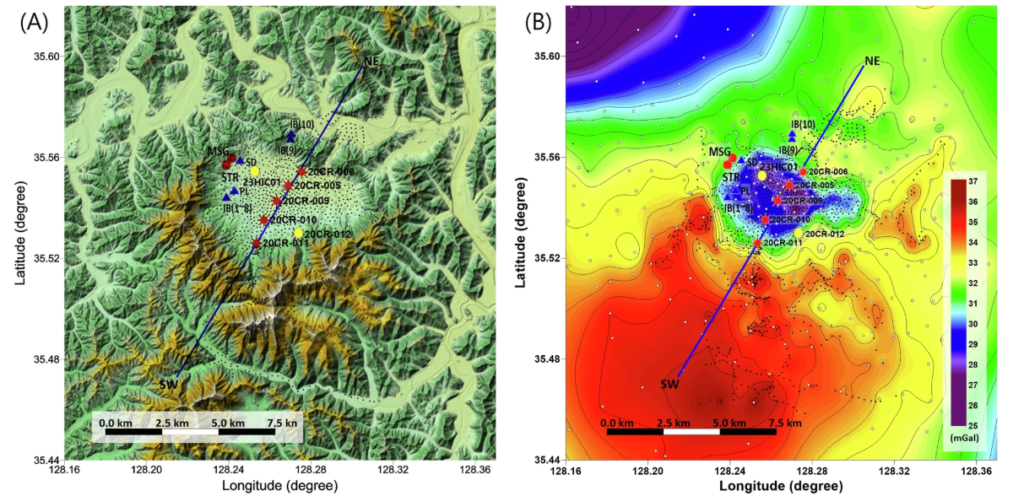
Impact craters are often studied for their dramatic geology, but a team led by KIGAM researchers Jaesoo Lim and Sung Won Kim wanted to know if the Hapcheon crater had also preserved a biological story. The basin, surrounded by mountains in Hapcheon Province, had already been confirmed as the country’s only impact crater through the discovery of shock-metamorphic features like shatter cones. Earlier work established that a lake once filled the depression.
The new study went further. During field surveys in 2020 and 2021, scientists found clusters of stromatolites buried in muddy gravel along the crater’s inner northwestern margin. These wavy, banded rocks, measuring about 10 to 20 centimeters in diameter, are not simple minerals. Stromatolites are built by communities of microbes that trap sediment and precipitate minerals, layer by layer, leaving behind some of the oldest known signs of life on Earth.
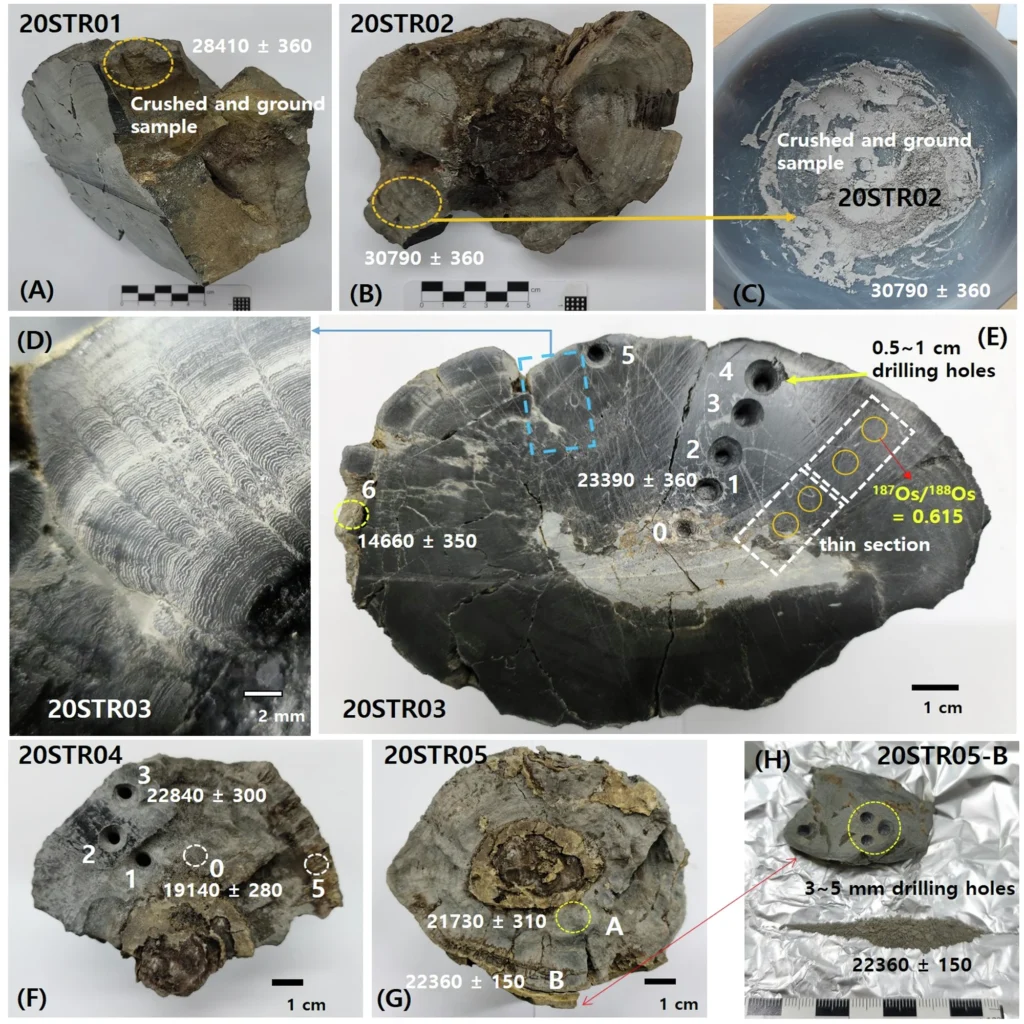
Detailed imaging with Raman spectroscopy and electron probe microanalysis showed alternating sheets rich in organic matter and calcite within the Hapcheon stromatolites. The researchers found quartz grains trapped at angles that could only be explained by sticky microbial mats binding them in place, a classic signature of biogenic activity. “The existence of terrestrial elements and quartz minerals in the organic matter layer beyond the angle of repose may imply the same biogenetic processes on the stromatolites,” the team wrote.
Chemical Fingerprints of an Ancient Hot Spring
Proving that these microbes grew in a warm, impact-heated lake required a detailed geochemical investigation. The researchers found two striking lines of evidence.
First, the stromatolites showed a significant positive Europium anomaly. Europium, a rare earth element, becomes more soluble and enriched in hot hydrothermal fluids compared to its chemical neighbors. As the mineral layers in the stromatolites grew, they captured this telltale signature, which diminished over time from the core outward. The team observed an anomaly of 2.72 in the oldest part of one specimen, fading to 1.58 in the younger outer layers. This pattern, the study reports, directly “serves as a proxy for past syndepositional hydrothermal influences” that gradually weakened.
Second, the stromatolites carried a meteoritic fingerprint. The researchers measured unusually high concentrations of osmium with a depleted isotope ratio in the fossils. Compared to the local bedrock, the osmium levels were up to 28 times higher, and the isotopic mixture pointed to a small but clear contribution from meteoritic material. A binary mixing model estimated the stromatolites contained roughly 0.021% meteoritic matter, material that would have been eroded from the crater’s interior and swept into the lake, where the microbial mats trapped it.
A Lukewarm Lake That Lasted Millennia
By radiocarbon dating organic matter in the growth layers, the team determined the stromatolites formed roughly between 23,400 and 14,600 years ago. This means the impact, which the study dates to about 42,300 years ago by analyzing charcoal sealed in deep impact breccia, kicked off a hydrothermal system that may have persisted for more than 27,000 years.
The ancient lake was not boiling but consistently warm and chemically rich. DNA analysis of the crater’s deep lake sediments, which the authors note should be interpreted cautiously as it may not represent the original microbiology, identified DNA sequences from moderate thermophiles, organisms that prefer warm water. One sequence was linked to Sulfuritortus calidifontis, a species previously isolated from a hot spring microbial mat. High levels of calcium, strontium, and sulfur in the oldest lake mud further point to a mineral-rich, hydrothermal environment where calcite could precipitate and stromatolites could grow.
“The early post-impact lake environments in the crater were characterised by relatively high pH and salinity,” the researchers concluded.
Clues for a Bombarded Earth and a Frozen Mars
The implications reach far beyond the Korean peninsula. During a period known as the Late Heavy Bombardment, the early Earth and Mars were pummeled by asteroids at a furious rate. If impacts on Earth routinely created hydrothermal refuges like the Hapcheon crater, these sites could have acted as localized “oxygen oases” where photosynthetic microbes like cyanobacteria survived and multiplied hundreds of millions of years before they oxygenated the entire planet.
The study stops short of claiming stromatolites directly caused the Great Oxidation Event around 2.4 billion years ago, framing the idea instead as a possible mechanism. But the physical evidence from Hapcheon gives that hypothesis a concrete, observable foundation. On Mars, which was similarly scarred by impacts and once had water, crater lakes heated by the same process could have been the last habitable environments as the planet dried and froze. “Craters with stromatolite-like sedimentary structures need to be considered as target areas for the origin and early evolution of life on Mars,” the researchers wrote.
The Hapcheon basin is only one crater, and the team calls for studying additional terrestrial impact sites to see if hydrothermal stromatolite systems were more common. For now, the Korean crater stands as a proof of concept: an asteroid can both break and build, and in the aftermath, a small, warm world can flicker into being on a devastated surface.

Farid Amber is a Canada-based writer and Editor-in-Chief who covers technology, space, and the environment. With a strong technical background, he brings a clear and practical perspective to stories about innovation, science, and the future of our planet.
His education includes a diploma in Applied Science, a master’s degree in Industrial Electrical Engineering, and a diploma in Electromechanical Automated Systems. This gives him a deep understanding of how modern technologies work, from complex engineering systems to the ideas driving new discoveries.
As Editor-in-Chief, Farid focuses on making complex topics easy to read, accurate, and meaningful. His goal is to help readers understand not only what is happening in the world of science and technology, but why it matters.
Leave a Reply