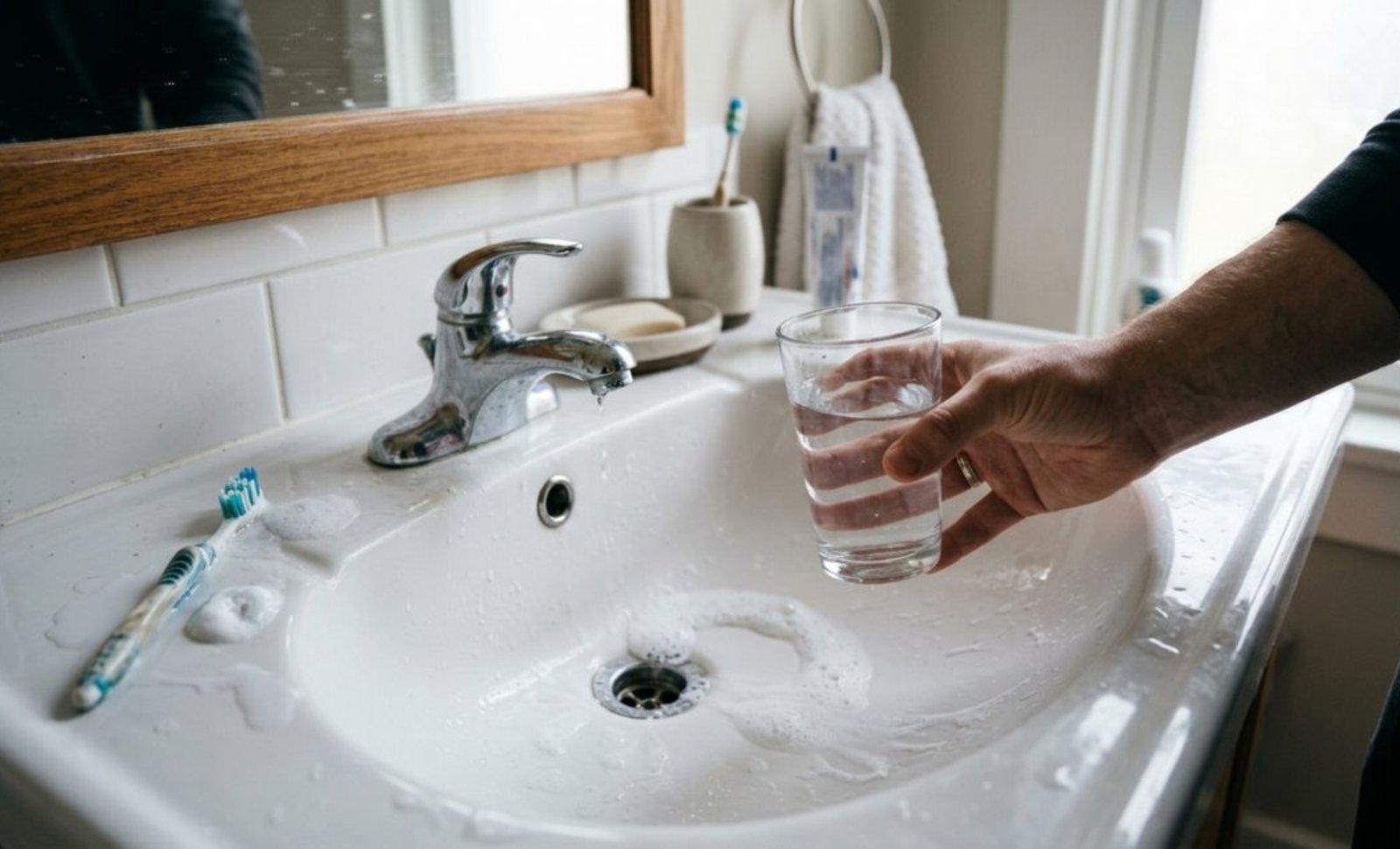
The toothbrush goes back into its holder, the toothpaste is spat into the sink, and a glass of water finishes the routine. For millions of people, rinsing immediately after brushing feels like the final step toward clean teeth. Yet that familiar habit can wash away some of the protection that fluoride toothpaste is meant to provide.
The UK National Health Service (NHS) advises people to spit out excess toothpaste without rinsing their mouths with water immediately afterward. The reason is straightforward: rinsing dilutes the fluoride left behind, reducing its ability to protect teeth against decay. The recommendation is backed by research into how fluoride remains in the mouth after brushing.
The distinction matters because brushing performs two different jobs. It removes dental plaque, but it also delivers fluoride, a mineral that continues helping to protect tooth enamel after the toothbrush has been put away.
Why Fluoride Still Matters After the Toothbrush Is Put Down
Teeth are constantly exposed to acids produced when oral bacteria break down sugars and starches. These acids gradually remove minerals from tooth enamel, the hard outer layer that protects each tooth. Saliva helps replace lost minerals, while fluoride makes that repair process more effective and improves enamel’s resistance to subsequent acid attacks.
The US National Institute of Dental and Craniofacial Research explains that fluoride can help stop or reverse the earliest stages of tooth decay through remineralization. Once decay has progressed to a permanent cavity, however, remineralization alone cannot restore the missing tooth structure.
This is why toothpaste does more than clean teeth during the two minutes of brushing. It also supplies fluoride that can remain available in saliva and around tooth surfaces afterward. Washing out the remaining toothpaste immediately reduces that reservoir of protection, even though the physical cleaning achieved by brushing has already taken place.
A Clinical Trial Revealed What Happens When People Rinse
A randomized controlled trial published in BMC Oral Health in March 2022 examined how rinsing affects the amount of fluoride retained in saliva. Researchers assigned 120 adults to 12 groups, testing six toothpaste formulations with and without water rinsing after brushing. Saliva samples were collected at intervals extending to 90 minutes.
The results showed that rinsing behavior, toothpaste formulation, and elapsed time significantly influenced fluoride retention. One formulation containing amine fluoride maintained elevated salivary fluoride concentrations at 90 minutes, while other formulations produced different patterns. The findings demonstrated that fluoride persistence depends on more than the amount listed on a toothpaste tube. PMC
Evidence of a longer-term benefit comes from a two-year clinical trial involving adults with high cavity rates. Among 113 participants who completed the study, those following a modified fluoride-brushing routine developed an average of 0.56 new enamel caries lesions, compared with 1.01 in the control group.
The researchers calculated a 44% preventive fraction, although the intervention also involved additional behavioral changes, including a different toothpaste technique and avoiding food and drink for two hours.
These findings help explain why the water used during a brief rinse can matter. Brushing removes plaque mechanically, while retained fluoride remains available for chemical protection afterward. The benefit of avoiding rinsing is therefore connected to preserving fluoride exposure, rather than reversing or repeating the cleaning process.
Mouthwash Immediately After Brushing Can Create the Same Problem
Water is not the only liquid that can affect fluoride retention. Mouthwash may also dilute or remove fluoride left by toothpaste when used immediately afterward. This creates a distinction between an oral-care product’s own benefits and the effect of using it at the wrong point in a routine.
The NHS recommends using fluoride mouthwash at a separate time, such as after lunch, rather than directly after brushing. That approach allows toothpaste fluoride to remain in the mouth while preserving an opportunity for an additional fluoride treatment later in the day.
There is, however, a distinction between water and therapeutic mouthrinses. A September 2025 review in the British Dental Journal explained that certain fluoride-containing mouthwashes can be used after brushing under appropriate circumstances. Mouthwashes designed to control gingivitis may also serve different clinical purposes, depending on their active ingredients and the patient’s needs. British Dental Journal
The American Dental Association (ADA) likewise recognizes mouthrinses as useful additions to brushing and interdental cleaning for some patients. Fluoride rinses can support cavity prevention, while antimicrobial formulations may help manage plaque and gingival inflammation. Their effectiveness depends on the formulation and how they are used, and they do not replace brushing or interdental cleaning. American Dental Association
The Toothpaste Label Matters as Much as the Final Rinse
Avoiding water immediately after brushing is only one part of effective oral hygiene. The fluoride concentration in the toothpaste also matters, particularly for adults with an increased risk of dental decay. A product that delivers an appropriate amount of fluoride gives the post-brushing routine something useful to preserve.
In its evidence-based preventive dentistry guidance, updated in September 2025, the UK government gives a strong recommendation for adults to brush at least twice daily with toothpaste containing 1,350–1,500 parts per million (ppm) fluoride. It also recommends spitting rather than rinsing to avoid diluting fluoride.
For everyday brushing, the routine is relatively simple: clean all tooth surfaces for approximately two minutes, brush before bedtime and once more during the day, and spit out the excess toothpaste without immediately washing the mouth with water. Interdental cleaning helps remove plaque from areas that toothbrush bristles cannot easily reach. The purpose is not to leave a mouthful of toothpaste behind, but to retain a useful concentration of fluoride.
Children require additional precautions. The NHS recommends a thin smear of fluoride toothpaste for children under three and a pea-sized amount for those aged three to six, with adult assistance or supervision. These smaller quantities help provide fluoride protection while limiting accidental swallowing.

Farid Amber is a Canada-based writer and Editor-in-Chief who covers technology, space, and the environment. With a strong technical background, he brings a clear and practical perspective to stories about innovation, science, and the future of our planet.
His education includes a diploma in Applied Science, a master’s degree in Industrial Electrical Engineering, and a diploma in Electromechanical Automated Systems. This gives him a deep understanding of how modern technologies work, from complex engineering systems to the ideas driving new discoveries.
As Editor-in-Chief, Farid focuses on making complex topics easy to read, accurate, and meaningful. His goal is to help readers understand not only what is happening in the world of science and technology, but why it matters.
Leave a Reply