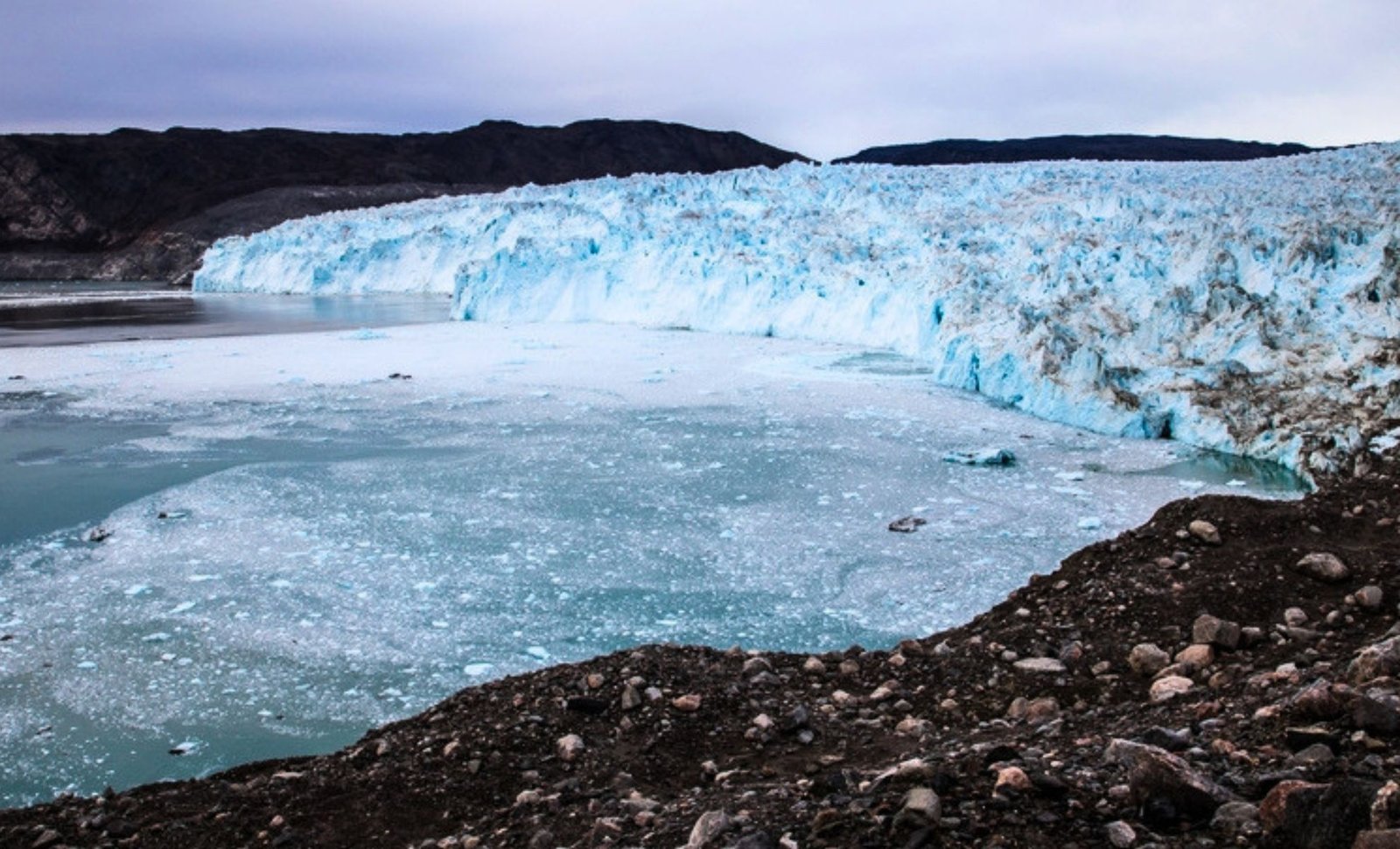
As the Arctic warms, scientists have long worried about a ticking carbon bomb buried in the permafrost. But a new study, published Wednesday in Nature, suggests that the thaw might trigger an unexpected countermeasure: accelerated rock weathering that pulls carbon dioxide out of the sky. The research, led by teams from Umeå University in Sweden and East China Normal University, offers a crucial and cautionary revision to how we calculate the climate impact of these frozen landscapes.
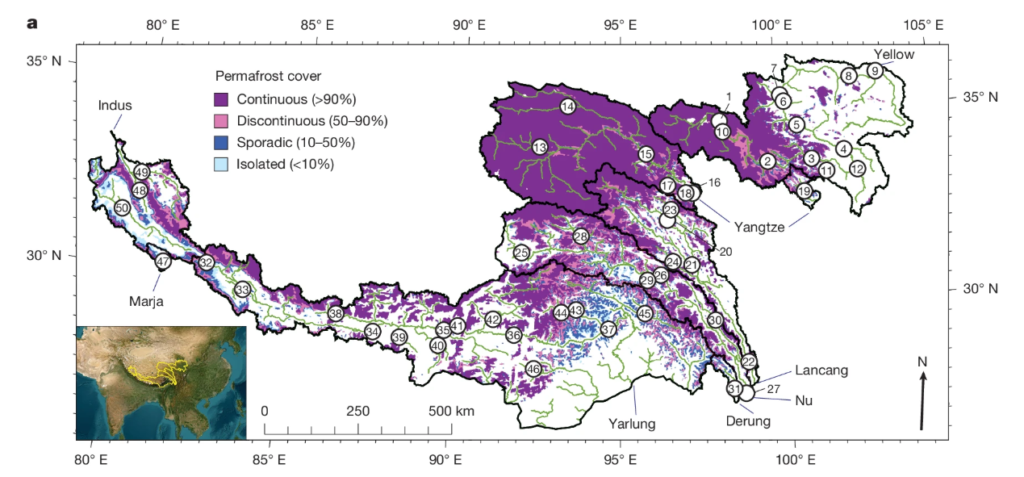
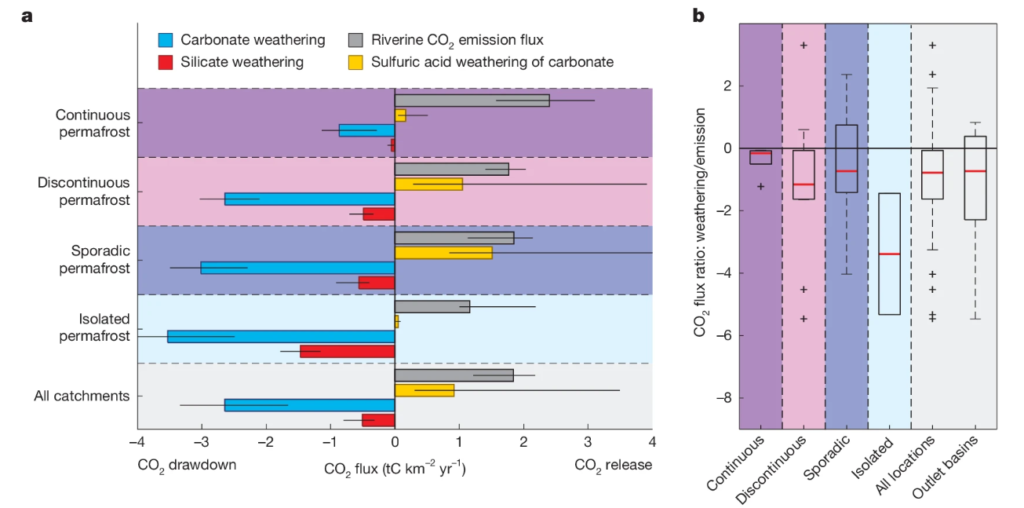
The scientists spent three years sampling water from over 50 rivers across the Qinghai-Tibet Plateau, an expanse of roughly 780,000 square kilometers. Their goal was to measure not just the greenhouse gases escaping from the water, but also the chemical fingerprints of rock weathering, a process where minerals react with water and air to lock carbon into solid compounds. They found that, on average, this geological absorption cancels out 35% of the CO₂ released by the rivers.
However, this average masks a critical geographic split. In regions with continuous permafrost, where the soil stays frozen year-round, weathering only offsets about 15% of the emissions. But in zones where the permafrost is patchy and actively degrading, the absorption spikes. In these areas, the rate of carbon uptake can exceed river emissions by as much as 340%, effectively turning local waterways into temporary carbon sponges rather than sources of pollution.
Two Forces, One Thaw
To understand why, imagine a block of ice packed with ancient grass and soil. When it melts, two entirely separate chains of events unfold simultaneously.
The first is biological and fairly well-known. As the ground warms, dormant microbes spring to life and start digesting that long-frozen organic matter. Their digestion process releases CO₂ and methane back into the air, the climate feedback we have been most worried about.
The second is geological and often overlooked. Melting ice doesn’t just expose old plants; it also exposes fresh bedrock and increases the flow of groundwater. Water trickling through newly fractured rocks triggers chemical reactions. Certain minerals react with dissolved CO₂ to form bicarbonate, essentially a harmless stone-like substance that washes downstream and stays locked away for millennia. It is a slow, grinding process, but on the scale of a river basin, it moves massive amounts of carbon.
Co-author Jan Karlsson points out that the magnitude of this uptake is too big to ignore, stating that evaluating the climate effects of permafrost thaw demands that researchers account for both the rapid release of ancient carbon and this slower geological counterbalance.
A Critical Caveat for Climate Models
While this news might sound like a reprieve, the researchers are quick to ground the findings in reality. Most major climate models used by the IPCC currently do not include this weathering process in their permafrost projections. By omitting it, these models may be overestimating the net emissions coming from the Arctic and high-altitude regions.
Yet, there is a catch. The effectiveness of weathering depends entirely on the local rock type. In areas containing sulfide minerals, the chemical reaction can produce acid, which sometimes results in a net release of CO₂ rather than an absorption. Furthermore, the biological release of carbon is a fast feedback, happening within years. The geological uptake, while significant, plays out over decades to centuries.
This lag means weathering won’t save us from the immediate surge of emissions. But it does provide a necessary buffer that scientists must integrate into their math. The study ultimately reframes the permafrost not as a simple binary of frozen safety versus melted disaster, but as a dynamic battlefield where biological decay and geological repair are locked in a long, slow tug-of-war, one that we are only just beginning to measure accurately.

Ghiles Houari is a writer based in Algeria with a technical background in applied science and industrial electronics. He is naturally curious about how things work, from everyday technology to the systems and ideas shaping the modern world.
With his hands-on technical training, Ghiles brings a practical and thoughtful perspective to his writing. He focuses on making science, technology, electronics, and innovation clear, interesting, and easy to understand.
For him, good writing is not just about explaining facts — it is about helping readers see why they matter.


Leave a Reply