
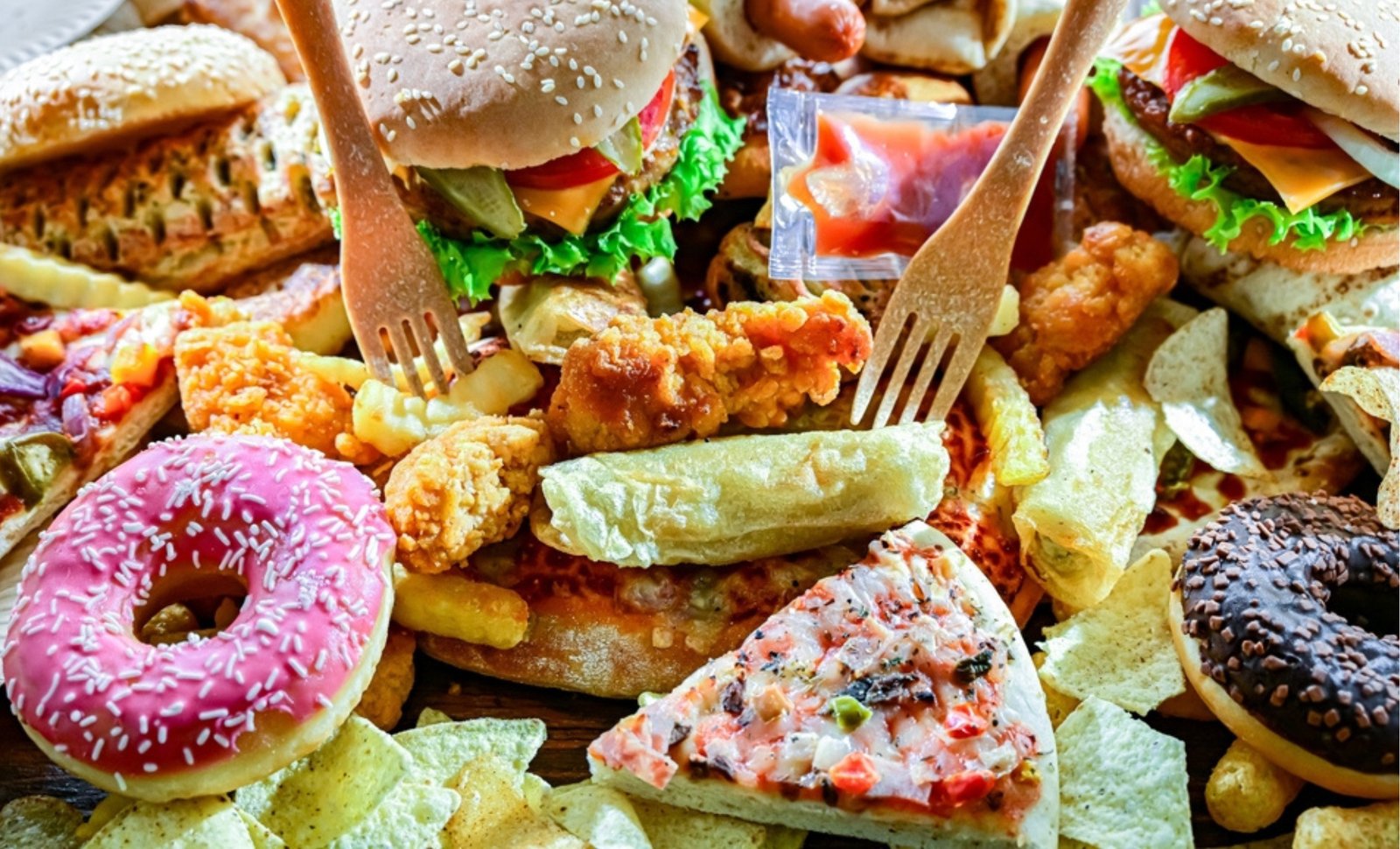
A new MRI study published in Radiology suggests that ultra-processed foods may be linked to a hidden change inside the body: more fat within the thigh muscles.
The study does not prove that packaged snacks, sugary drinks, ready meals, or other ultra-processed foods directly damage muscle. But researchers found an association between higher ultra-processed food intake and greater muscle fat infiltration, a marker of poorer muscle quality, in adults at risk for knee osteoarthritis.
That matters because the concern is not only body weight. The finding raises a more specific question: could a diet heavy in ultra-processed foods be connected to changes in muscle composition that affect mobility, aging, and joint health?
The Study Looked Beyond Body Weight
The research used data from the Osteoarthritis Initiative, a long-running study focused on knee osteoarthritis. According to the study authors, researchers analyzed 615 adults who were at risk for knee osteoarthritis but did not yet have clear radiographic osteoarthritis or knee or hip pain.
The average participant was about 60 years old. The group included 340 women, and the average body mass index was 27, which falls in the overweight range. Ultra-processed foods made up an average of 41.4% of the participants’ diets.
Researchers estimated ultra-processed food intake using a self-reported food questionnaire and classified foods with the NOVA system, which groups foods by their level of industrial processing.
Ultra-processed foods often include packaged snacks, sugary cereals, soft drinks, ready-to-eat meals, processed meats, and products made with additives, flavorings, emulsifiers, or ingredients not commonly used in home cooking.
MRI Scans Showed Fat Inside Thigh Muscles
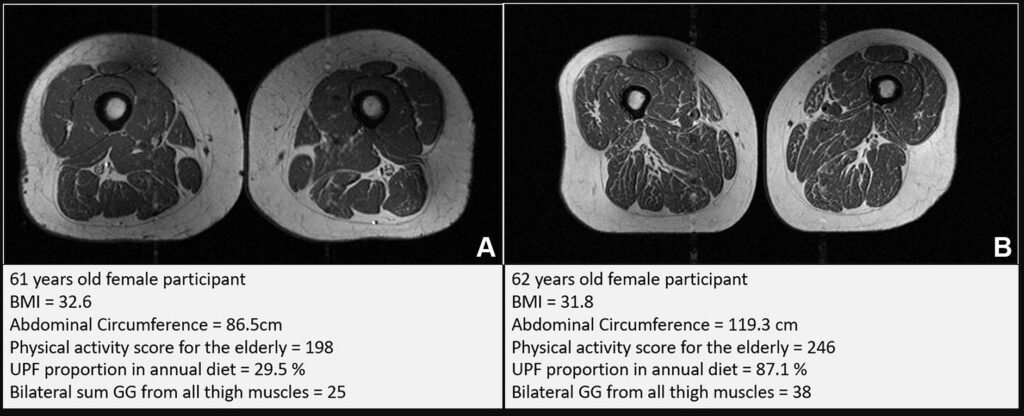
The key part of the study was MRI. Researchers examined thigh MRI scans and graded muscle fat infiltration using the Goutallier classification, a system that ranges from 0, meaning no fatty streaks, to 4, meaning more than 50% fatty signal intensity.
They looked at 10 bilateral thigh muscles and calculated scores for major muscle groups, including flexors, extensors, adductors, and total thigh muscle composition.
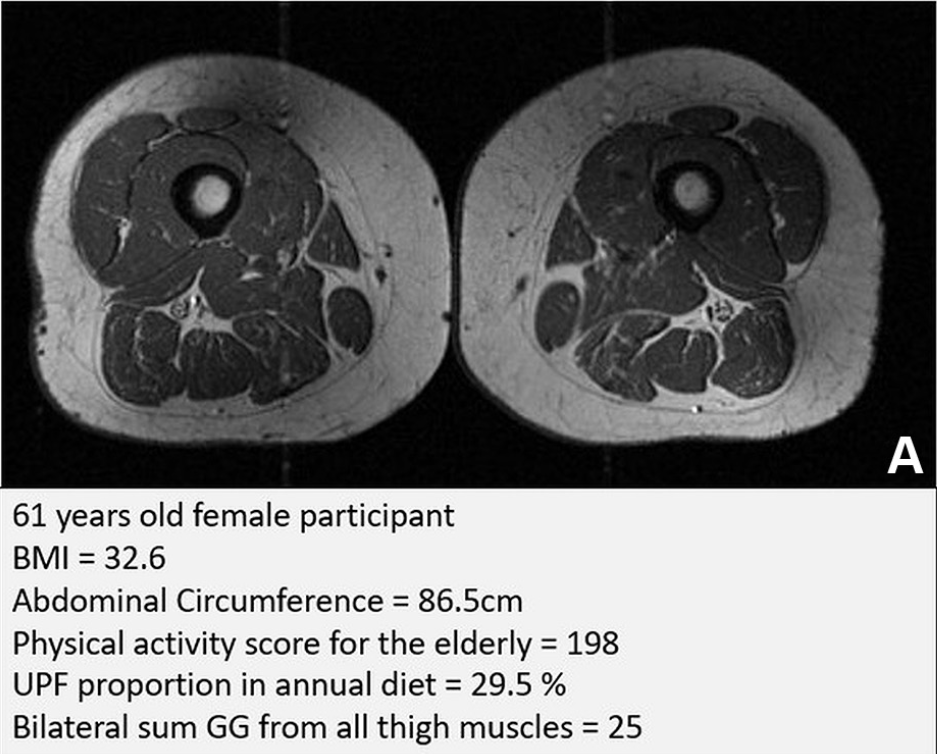
Muscle fat infiltration means fat is present within muscle tissue. In plain language, it is a sign that muscle quality may be poorer, even when body weight or BMI does not tell the full story.
Higher Ultra-Processed Food Intake Was Linked to Poorer Muscle Quality
The researchers found that higher ultra-processed food intake was associated with greater fat infiltration in thigh muscles.
In models adjusted for BMI, higher ultra-processed food consumption was associated with higher muscle fat infiltration across all thigh muscles, as well as in the bilateral flexors and adductors. When researchers adjusted for abdominal circumference instead of BMI, the association became stronger across all muscle groups.
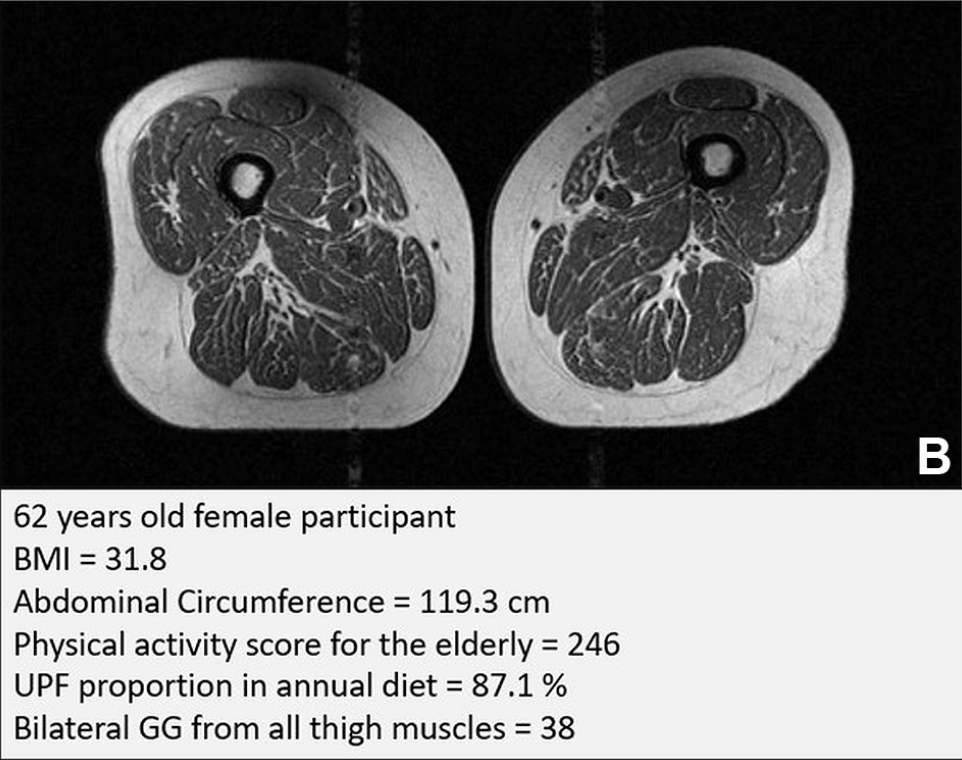
That is important because BMI measures weight relative to height, but it does not show where fat is distributed or what is happening inside muscle. Abdominal circumference can better capture central fat distribution, which may be more relevant to metabolic and muscle health.
Why This Matters for Knee Osteoarthritis
The study focused on people at risk for knee osteoarthritis, a common joint condition that can affect mobility and quality of life. Thigh muscles help stabilize and support the knee, so poorer muscle quality could potentially affect movement, strength, balance, and joint loading.
A News-Medical report on the research highlighted the same concern: higher ultra-processed food intake was linked to poorer thigh muscle quality, a finding that may matter as people age and try to preserve mobility.
Still, the study was not designed to prove that ultra-processed foods directly lead to osteoarthritis progression.
The Finding Is Not “Junk Food Turns Muscle Into Fat”
Some headlines may describe the result as junk food turning muscle fibers into fat. That phrasing overstates the evidence.
The more accurate conclusion is that people who reported eating more ultra-processed foods had more fat infiltration in their thigh muscles on MRI. The study was cross-sectional, meaning it looked at diet and MRI findings at one point in time. It cannot show which came first or prove cause and effect.
A Techno-Science summary of the study used a more dramatic junk food and muscle health angle, but the primary evidence supports a careful interpretation: higher ultra-processed food intake was linked to more muscle fat infiltration, not proven to directly transform muscle into fat.
Food Quality May Matter as Much as Calories
One useful takeaway is that calories alone may not fully explain the relationship between diet and muscle health.
Ultra-processed foods can be high in added sugar, salt, refined starches, unhealthy fats, and additives. They can also displace more nutrient-dense foods, including vegetables, fruits, legumes, whole grains, fish, eggs, dairy, nuts, and lean protein sources.
For muscle health, the quality of the overall diet matters. Muscles need adequate protein, but they also depend on a broader nutritional environment that supports metabolism, inflammation control, and physical function.
What Readers Should Take From This
The study adds to growing evidence that ultra-processed foods may affect health in ways that are not always obvious from weight alone. In this case, higher intake was linked to more fat inside thigh muscles among adults at risk for knee osteoarthritis.
The finding should not be read as proof that ultra-processed foods directly cause muscle fat accumulation. It should be read as a reason to look more carefully at the relationship between diet quality, muscle composition, mobility, and aging.
For now, the clearest message is simple: a diet built mostly around minimally processed, nutrient-dense foods may support the body in ways that calorie counts and bathroom scales do not fully capture.

Ghiles Houari is a writer based in Algeria with a technical background in applied science and industrial electronics. He is naturally curious about how things work, from everyday technology to the systems and ideas shaping the modern world.
With his hands-on technical training, Ghiles brings a practical and thoughtful perspective to his writing. He focuses on making science, technology, electronics, and innovation clear, interesting, and easy to understand.
For him, good writing is not just about explaining facts — it is about helping readers see why they matter.
Leave a Reply