
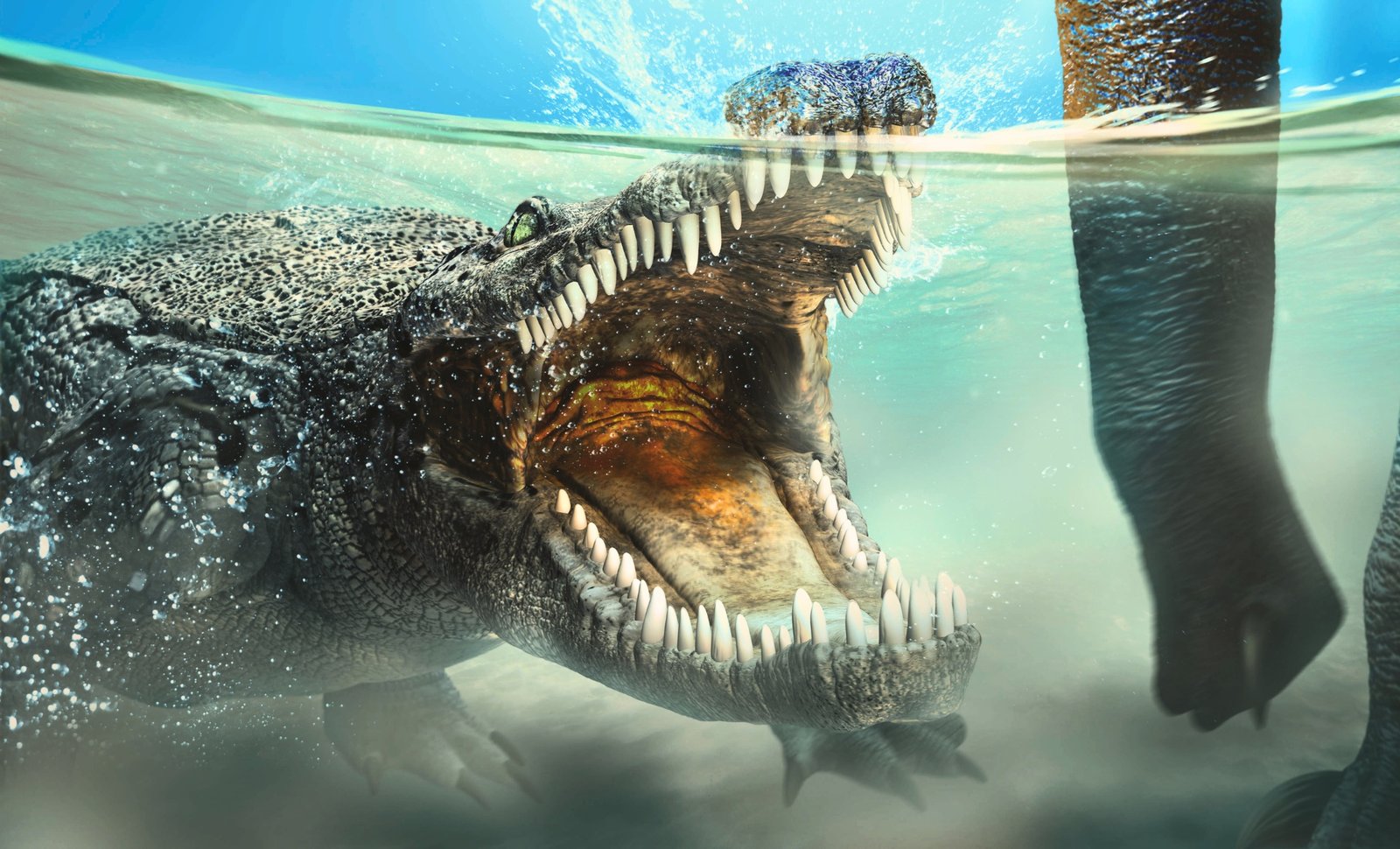
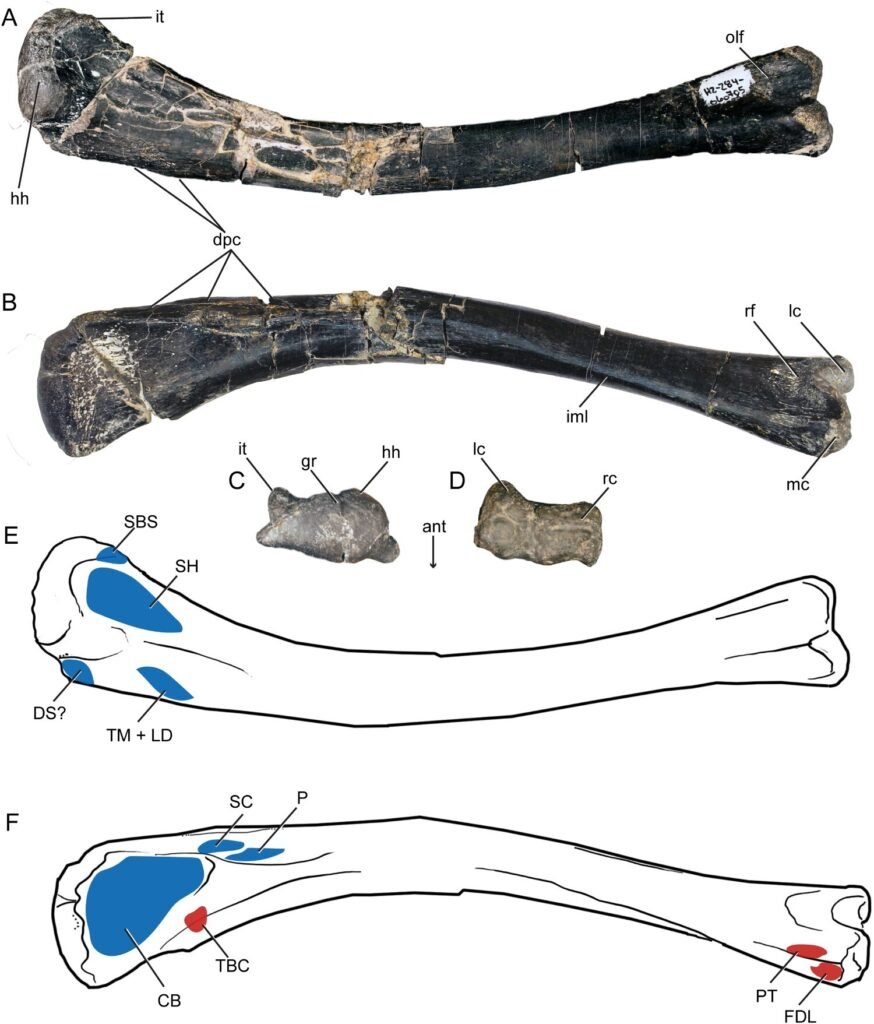
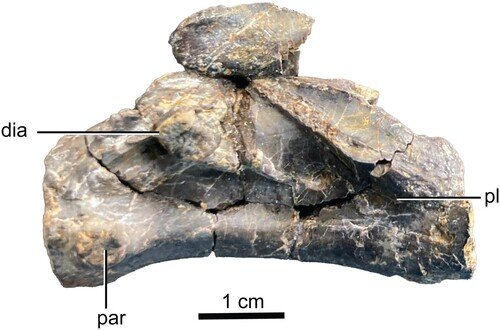
A strange, beaked reptile that walked on two legs and was an ancient cousin of today’s crocodiles has been identified from fossils found at the legendary Ghost Ranch site in New Mexico. Named Labrujasuchus expectatus, the creature is not a dinosaur but a bizarre member of the crocodile lineage that independently evolved a body plan strikingly similar to ostriches and their extinct relatives.
The discovery, published in Journal of Vertebrate Paleontology, fills a long-suspected gap in the Triassic fossil record and underscores an era of wild evolutionary experimentation that predated the rise of the dinosaurs.
A Crocodile Relative Masquerading as an Ostrich
The newly described animal belonged to a group called shuvosaurids, which are ancient relatives of modern crocodiles. Unlike their semi-aquatic, four-legged, toothy descendants, shuvosaurids navigated the Late Triassic world on two legs, brandished tiny arms, and used a toothless, beaked mouth to feed. Labrujasuchus expectatus, in essence, was a crocodile relative masquerading as an ostrich, a striking example of prehistoric reptile evolution taking an unexpected turn.
“Bipedalism is certainly a unique path for crocodile relatives to take, but it’s a path well-trod by dinosaurs and later birds. It obviously worked for these animals,” said Dr. Alan Turner, lead author on the paper, in a news release from the Natural History Museum of Los Angeles County. Dr. Nate Smith, co-author and the Gretchen Augustyn Director & Curator of the NHMLAC Dinosaur Institute, added, “We see a lot of the successful strategies for modern animals and non-avian dinosaurs first arise in the Triassic, and shuvosaurs are a great example of that convergent evolution.”
Convergent evolution is the process by which distantly related animals independently evolve very similar traits to solve the same survival problems. A classic example is how sharks and dolphins share a streamlined body shape despite one being a fish and the other a mammal. In this case, a lineage on its way to becoming modern crocodiles hit upon a lightweight, running body plan that would later be perfected by unrelated dinosaurs, a phenomenon that continues to intrigue paleontologists studying Triassic species discoveries.
The Expected Discovery from the “Ranch of the Witches”
The fossil was unearthed at Ghost Ranch, a landscape of colorful badlands in New Mexico that is world-famous for its dense deposits of Triassic fossils. The site’s old Spanish name, “Ranchos de los Brujos,” or “Ranch of the Witches,” inspired the new reptile’s genus name: Labrujasuchus, which translates to “Witch Crocodile.” According to local lore shared by the researchers, 19th-century ranchers promoted the spooky name to scare people away from their cattle-rustling operations.
The species name, expectatus, is a direct nod to the predictive power of the fossil record. Paleontologists had already discovered a shuvosaurid from earlier in the Triassic and another from later in the period. They knew a “missing link” species bridging the time gap must have existed, making the discovery of Labrujasuchus expectatus an expected finding.
“We also wanted to highlight how the fossil record works,” Dr. Smith said. “Finding one shuvosaur from earlier in the Triassic and one from later meant that we paleontologists knew there were probably more from in-between waiting to be discovered and described.”
A Star Wars Cantina of Ancient Life
This finding is part of a decades-long, ongoing excavation project at Ghost Ranch, co-led by Dr. Smith, which this summer marked its 20th anniversary. The site, immortalized in Georgia O’Keeffe’s paintings, has been a cornerstone of paleontology since the 1940s, when a massive graveyard of the small dinosaur Coelophysis was uncovered there. The older layers being worked now, known as the Hayden Quarry, are revealing an even stranger menagerie of life that existed millions of years before the Coelophysis quarry was formed.
Labrujasuchus shared its ecosystem with a host of other triassic oddities that could be described as a primordial Star Wars cantina. Among its contemporaries were the Drepanosaurus, a tree-dweller with a sloth-like claw and a prehensile tail, and Vancleavea, an armored, semi-aquatic reptile that functioned like a living mini-tank. It was a period of frantic evolutionary experimentation, where nature’s blueprints for modern body plans were tested, discarded, or refined.
The study reinforces how the body plans of long-gone oddities can echo in wildlife today, and how the Triassic past provides a crucial lens for understanding modern biodiversity. The research team’s ongoing work at Ghost Ranch continues to reveal new species, cementing the site’s legacy as a window into a world that can feel entirely alien yet deeply foundational. For enthusiasts tracking the latest paleontology news, this Ghost Ranch fossil discovery stands as a compelling reminder that the age of reptiles still holds countless secrets.

Ghiles Houari is a writer based in Algeria with a technical background in applied science and industrial electronics. He is naturally curious about how things work, from everyday technology to the systems and ideas shaping the modern world.
With his hands-on technical training, Ghiles brings a practical and thoughtful perspective to his writing. He focuses on making science, technology, electronics, and innovation clear, interesting, and easy to understand.
For him, good writing is not just about explaining facts — it is about helping readers see why they matter.
Leave a Reply