
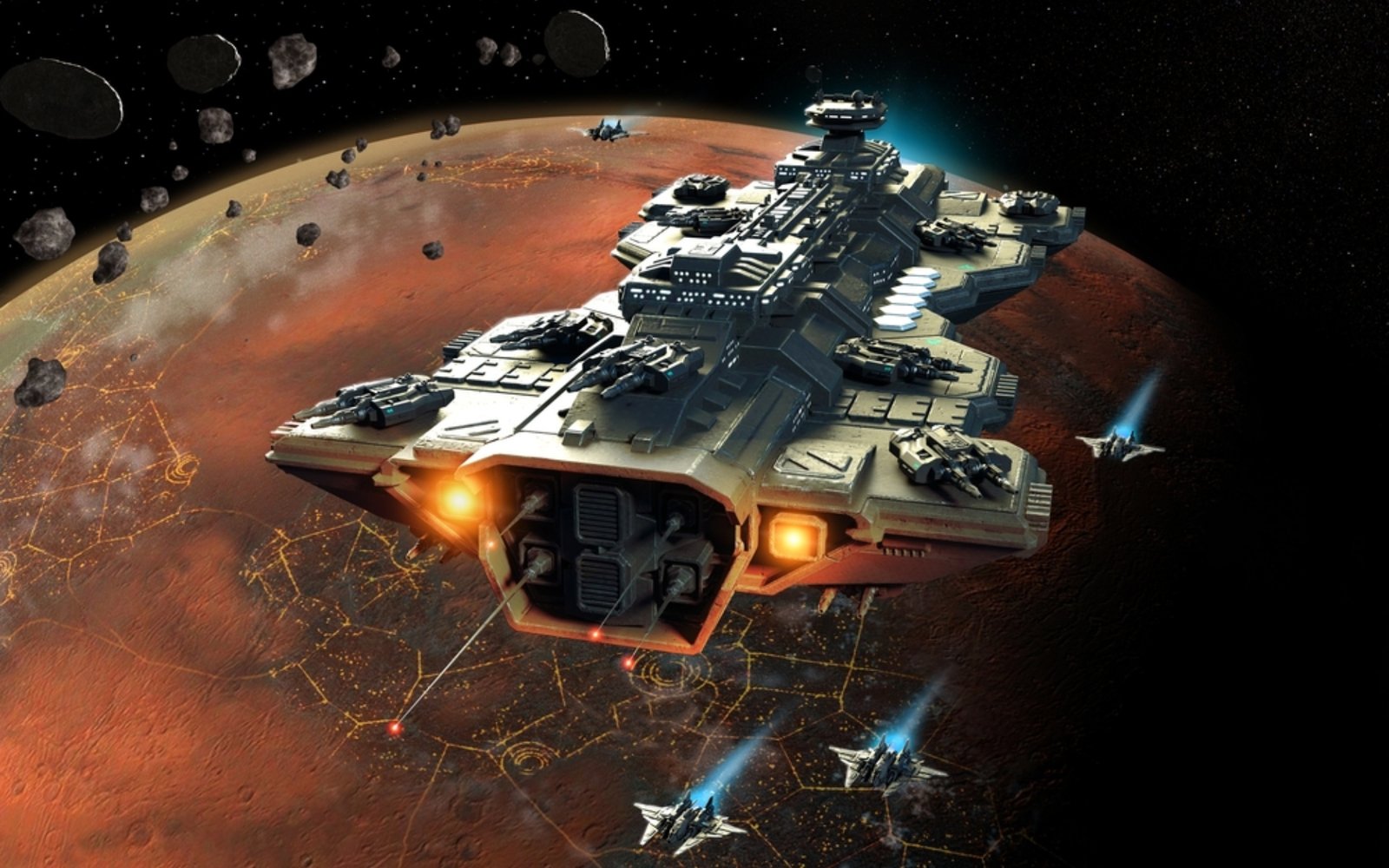
It’s not often that a press release from a government agency sounds like a page torn from a science fiction novel. But on March 24, 2026, NASA did exactly that. The agency announced it is ditching the slow, chemical-fueled crawl to Mars and is betting the house on a nuclear-powered spaceship set to fly by the end of 2028. And because this is NASA in the 21st century, the ship won’t be traveling alone it’s carrying a swarm of robotic helicopters in its belly.
The mission is called Skyfall, and the spacecraft is named Space Reactor-1 (SR-1) Freedom. According to the official statement released by NASA and covered extensively by outlets like Space.com and Scientific American, this is being billed as “the first nuclear powered interplanetary spacecraft.” The timeline is aggressive, the technology is hot (literally), and the implications for how we explore the solar system are profound.
A Reactor Riding a Rocket
For decades, nuclear propulsion has been the great “what if” of space travel. Engineers have long known that if we want to get to Mars faster or send serious payloads to the outer planets, chemical engines won’t cut it. You need something with more punch per pound of fuel. That something is nuclear electric propulsion (NEP) .
Here’s how it works, and it’s simpler than it sounds: SR-1 Freedom will use a compact fission reactor to generate a steady stream of electricity. That electricity powers a set of highly efficient xenon thrusters. Unlike the terrifyingly hot nuclear thermal rockets of past concepts that blast radioactive exhaust, this system runs cooler and cleaner. The reactor’s heat makes electricity, not direct thrust. It’s a slow, steady push that builds up incredible speed over time.
“After decades of study and billions spent on concepts that have never left Earth, America will finally get underway on nuclear power in space,” Jared Isaacman, NASA Administrator, said during the “Ignition” event where the policy was unveiled.
But launching a live nuclear reactor off planet Earth is not a trivial safety concern. NASA is well aware of the public anxiety surrounding the word “nuclear.” To mitigate risk, the reactor will remain completely dormant during launch. According to the mission profile detailed by 3DVF and confirmed by NASA’s statements, the reactor will stay “cold” until SR-1 Freedom reaches a safe altitude of at least 800 kilometers above Earth. Only then, after systems checks, will the fission process begin.
Why Mars Needs More Helicopters
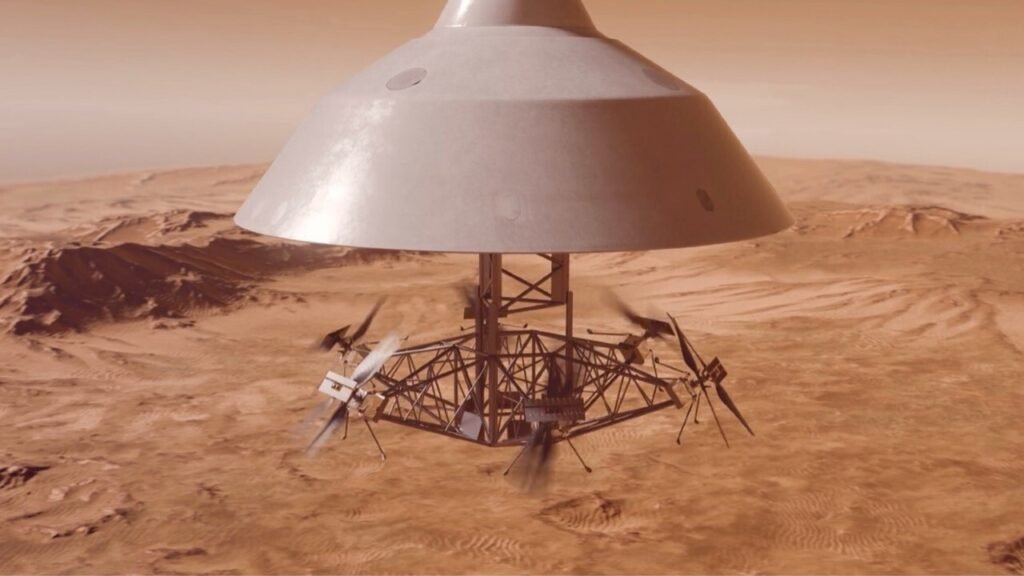
While the propulsion system is the star of the engineering show, the payload is what captures the imagination. Tucked inside SR-1 Freedom will be a fleet of three helicopters destined for the Red Planet. These aren’t just duplicates of Ingenuity, the tissue-box-sized marvel that made 72 flights alongside the Perseverance rover. According to Steve Sinacore, the program executive for NASA’s Space Reactors Office, these next-gen choppers are built for heavy lifting in terms of data.
“They will carry cameras and ground-penetrating radar to scout a future landing site, to understand the slopes and hazards for human-scale landers,” Sinacore explained during the mission briefing. “They will also map and characterize the subsurface water ice to find out where the water ice deposits are.”
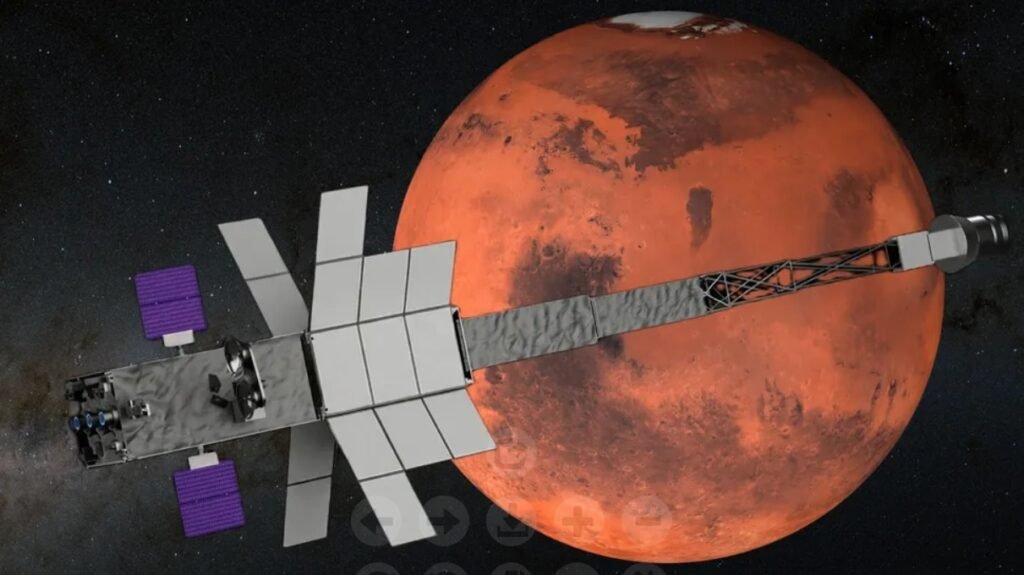
Image credit: NEMES LASZLO/SCIENCE PHOTO LIBRARY/Getty Images/NASA
The mission architecture is elegant in its brutality. SR-1 Freedom arrives at Mars, deploys the helicopters, and lets them loose in the whisper-thin Martian atmosphere. The rotors will need to spin at blistering speeds to gain lift, but if they work, they offer a bird’s-eye view of terrain that rovers can only dream of reaching. It’s reconnaissance for the human boots that will eventually follow.
The Gateway Gambit and the 2028 Deadline
There is an unspoken reality hanging over this mission: the deadline of December 2028 is not arbitrary. It coincides with the final month of President Donald Trump’s current term. As Scientific American noted in its analysis, “a vision by itself is a dream a vision and a budget is a possible future.” This is a mission on a political stopwatch.
To make the timeline work, NASA is performing a bit of cosmic cannibalism. The agency recently paused development of the Gateway lunar space station. Some of the most advanced hardware from Gateway specifically the Power & Propulsion Element (PPE) is being repurposed and bolted onto the SR-1 Freedom. It’s a pragmatic, if jarring, shift in priorities that signals the Moon base and Mars transit are now on a convergent path.
Industry partners are also circling. While the launch vehicle hasn’t been finalized, 3DVF reports that SpaceX’s Falcon Heavy is seen as a strong contender. Meanwhile, Lockheed Martin and the European Space Agency are advancing their own parallel nuclear concepts, indicating a broader, international pivot toward fission as the future of deep spaceflight.
A Tightrope Walk Over the Red Planet
Despite the fanfare, the plan is not without significant headwinds. The 2028 launch window is, as one former senior NASA official told Scientific American anonymously, “tight.” Building a space-rated nuclear reactor that is safe, efficient, and flight-ready in under three years is a monumental engineering challenge.
There is also the question of physics. NEP is a marathon runner, not a sprinter. It excels at long-haul trips to Jupiter or Neptune where solar power fades and time is abundant. For the relatively short jaunt to Mars, some aerospace engineers, including Andrew Higgins of McGill University, argue that the technology is overkill a showcase meant to prove the reactor works rather than a necessity for this specific trip.
“If it all worked, but it launched two years behind schedule,” the former NASA official mused in Scientific American, “You think that would be a horrible failure? We would have nuclear electric propulsion! I would be cheering up and down.”
What Comes Next
If SR-1 Freedom lights up its reactor in 2028 and successfully dispatches a squadron of helicopters to Mars, it changes the calculus for everything beyond the Moon. NASA has stated that after dropping off the Skyfall payload, the spacecraft may continue its journey deeper into the solar system, proving that the hardware can survive the long, cold trek to the outer planets.
For now, the world watches as NASA attempts to condense a decade of nuclear development into a few short years. It’s a high-stakes, high-reward maneuver that could either usher in a new golden age of fast interplanetary travel or become another cautionary tale of a reactor that never left the launch pad.

Farid Amber is a Canada-based writer and Editor-in-Chief who covers technology, space, and the environment. With a strong technical background, he brings a clear and practical perspective to stories about innovation, science, and the future of our planet.
His education includes a diploma in Applied Science, a master’s degree in Industrial Electrical Engineering, and a diploma in Electromechanical Automated Systems. This gives him a deep understanding of how modern technologies work, from complex engineering systems to the ideas driving new discoveries.
As Editor-in-Chief, Farid focuses on making complex topics easy to read, accurate, and meaningful. His goal is to help readers understand not only what is happening in the world of science and technology, but why it matters.
Leave a Reply